Published
11 minute read
Collagen supplements are everywhere.
Powders in coffee. Gummies. Drinks. “Beauty” supplements promising stronger skin, fewer wrinkles and more collagen from the inside out.
And the obvious question is:
If I swallow collagen, doesn't my stomach just digest it?
Yes.
But that doesn't automatically mean collagen supplements do nothing.
The more accurate answer is that collagen is broken down during digestion into amino acids and smaller pieces called peptides. Some of those collagen-derived peptides can be absorbed into the bloodstream.
So the question isn't really whether the collagen survives your stomach intact.
It doesn't.
The better question is:
Do the pieces that are absorbed actually change your skin?
That is where the evidence becomes interesting, and much less certain.
Collagen is one of the main structural proteins in your body.
It helps give skin its strength and support. It is also found in tendons, ligaments, cartilage, bone and many other tissues.
As skin ages, collagen production decreases and existing collagen becomes more fragmented and disorganized. Sun exposure accelerates that process.
That contributes to changes such as thinner skin, wrinkles and loss of elasticity.
So the idea behind taking collagen orally seems logical:
If skin loses collagen, why not eat more collagen?
Unfortunately, human biology isn't quite that simple.
Your digestive system certainly breaks it down.
You do not drink a scoop of collagen powder and then have that same collagen molecule travel directly from your intestine into your cheek.
Collagen supplements are usually sold as hydrolyzed collagen or collagen peptides. That means the large collagen protein has already been broken into smaller pieces to make it easier to digest.
Once you swallow it, digestion continues.
Some of it becomes individual amino acids.
But interestingly, some very small collagen-derived peptides appear to survive digestion and enter the bloodstream.
A 2024 randomized human study found measurable amounts of hydroxyproline-containing dipeptides and tripeptides in the blood after people consumed collagen hydrolysates. [1]
This matters because it makes the common argument that “collagen supplements can't possibly work because the stomach destroys them” too simplistic.
They are digested. But some collagen-derived peptides are still absorbed.
Possibly.
Collagen contains unusually high amounts of amino acids such as glycine, proline and hydroxyproline.
After collagen is consumed, small peptides containing hydroxyproline can appear in the bloodstream.
Laboratory studies suggest some of these peptides may act as signals to fibroblasts, the cells that produce collagen and other components of the skin's supporting structure. [2]
That creates a plausible biological explanation for how oral collagen might affect skin.
But this is an important distinction:
A plausible mechanism is not the same thing as proof that a supplement meaningfully reduces aging in real people.
For that, we need clinical trials.
This is where things get complicated.
If you look at many of the published trials and older meta-analyses, the answer appears to be yes.
A 2023 meta-analysis looked at 26 randomized controlled trials involving more than 1,700 participants. Overall, people taking hydrolyzed collagen showed improvements in skin hydration and elasticity compared with placebo. [3]
Other reviews have also reported improvements in hydration, elasticity and sometimes wrinkle measurements.
More recently, a 2026 systematic review of 25 randomized trials found that collagen supplementation improved hydration in 10 of 15 studies, elasticity in 10 of 13, and wrinkle measurements in 9 of 10. [4]
That sounds convincing.
But there is another side to the evidence.
Because the quality of the studies matters as much as the number of positive studies.
A major 2025 systematic review and meta-analysis looked at 23 randomized trials involving 1,474 people.
When all the studies were combined, collagen supplements appeared to improve hydration, elasticity and wrinkles.
But then the researchers separated the trials by study quality and funding.
The results changed dramatically.
Studies without pharmaceutical-company funding did NOT show significant improvement in hydration, elasticity or wrinkles.
Higher-quality studies also failed to show a significant benefit.
The authors concluded that the existing evidence did not support recommending collagen supplements to prevent or treat skin aging. [5]
That is an important finding.
It doesn't prove collagen supplements don't work.
It tells us that the apparent benefit may be smaller and less certain than the supplement industry would have you believe.
Because the collagen studies are all over the place.
Different trials use different products.
Different doses.
Different collagen sources.
Different peptide sizes.
Different lengths of treatment.
Different ways of measuring wrinkles or hydration.
And many studies are small.
A 2026 review specifically noted that the majority of the collagen trials it assessed had a high risk of bias. [4]
Another 2026 meta-analysis found that oral peptides improved hydration and produced a modest improvement in wrinkles, while results for elasticity and skin density were inconsistent. [6]
So when someone says, “Studies prove collagen works,” that is technically incomplete.
Some studies suggest it works.
The better studies make the answer less certain.
Probably modest.
This is where supplement marketing often gets ahead of the science.
I would not expect collagen powder to create the kind of change you would see from laser resurfacing, a retinoid, surgery or other appropriately selected treatments.
Even studies showing benefit are generally measuring relatively small changes in things such as skin hydration, elasticity or wrinkle depth.
That doesn't mean those changes have no value.
It means expectations should match the evidence.
Collagen supplements are not an oral facelift.
Many skin studies have used roughly 2.5 to 10 grams of hydrolyzed collagen peptides per day, often for eight to twelve weeks or longer. [3,4]
This is another reason I tell patients to look beyond the front of the bottle.
A product can say “collagen” in enormous letters but contain a relatively small amount.
Powders often make it easier to consume several grams.
A gummy may contain much less.
The important number isn't how attractive the packaging is.
It is how much collagen peptide you are actually taking and whether that particular formulation has been studied.
There is a great deal of marketing around the source of collagen.
Marine collagen is often presented as more “premium” or more absorbable.
Bovine collagen is commonly used because it is widely available and rich in Type I and Type III collagen.
But at this point, I don't think there is convincing clinical evidence that everyone interested in skin should automatically choose marine over bovine collagen.
In the 2023 meta-analysis, collagen source did not significantly change the effect on elasticity. [3]
The characteristics of the peptides themselves may ultimately matter more than whether the collagen started in a cow or a fish.
People with food allergies should, of course, pay attention to the source.
I wouldn't get overly distracted by this on the label.
Your body is not taking Type I collagen from the container and installing it directly as Type I collagen in your dermis.
It is digesting the protein.
The amino acids and peptides that result are then absorbed and used or processed by the body.
The idea that you can simply eat a particular collagen type and direct that exact collagen to a specific body part is an oversimplification.
We don't completely know.
Collagen provides amino acids that are important building blocks for connective tissue, but collagen itself is an incomplete protein because it does not contain all essential amino acids in ideal proportions.
I wouldn't replace good dietary protein with collagen powder.
A healthy diet that provides adequate protein remains important.
Your body also needs nutrients such as vitamin C to make collagen normally.
So if someone has a poor diet, adding an expensive scoop of collagen while ignoring overall nutrition seems backwards to me.
For most healthy adults, hydrolyzed collagen appears to be reasonably well tolerated in clinical studies. [4,6]
But “supplement” does not mean risk-free.
Collagen is usually animal-derived, so the source matters for people with allergies or dietary restrictions.
Some products also contain much more than collagen. They may include vitamins, minerals, herbs, sweeteners or other ingredients.
This becomes important because if a 15-ingredient “beauty powder” causes a benefit—or a problem—it can be difficult to know which ingredient was responsible.
I prefer simpler products where possible.
This is another area where marketing tends to be vague.
If collagen peptides do improve skin hydration or collagen signalling, there is no good reason to assume the effect becomes permanent after a three-month course.
Your skin continues to age.
Sun exposure continues.
Collagen continues to turn over.
If there is a benefit, it probably requires continued use to maintain at least some of that effect.
We need better long-term studies to know exactly what happens after supplementation stops.
I wouldn't tell someone they need to.
But I also wouldn't tell them it is obviously useless.
That would ignore the evidence.
My interpretation of the research is:
There is a biologically plausible mechanism.
Some collagen-derived peptides are absorbed after you swallow them.
A meaningful number of randomized studies show improvements in skin hydration and elasticity, with some showing improvements in wrinkles.
But:
many of the studies are small, heterogeneous or industry-funded, and the strongest recent analysis found that the benefit disappeared when looking at higher-quality or independently funded trials.
That puts collagen supplements into an interesting category.
They may help.
They are probably not doing what the advertising suggests.
And I would not make them the foundation of an evidence-based skin-health program.
If your real goal is protecting the collagen in your face, I would put several things ahead of a supplement.
Sun protection is fundamental.
Ultraviolet radiation accelerates collagen breakdown and skin aging.
For appropriate patients, a topical retinoid has considerably stronger evidence for improving photoaged skin than most supplements.
And when we need to create a greater change, treatments such as fractional laser resurfacing can intentionally stimulate wound healing and dermal remodelling in a way that drinking collagen cannot reproduce.
That doesn't mean you can't take the supplement too.
It means we should keep its role in perspective.
So, do collagen supplements work?
The answer is not a satisfying yes or no.
They are not simply destroyed in the gut and rendered useless. Some small collagen-derived peptides are absorbed into the bloodstream and may have biological activity.
Clinical studies frequently show modest improvements in skin hydration, elasticity and sometimes wrinkles.
But the evidence becomes much less convincing when researchers look only at higher-quality and independently funded trials.
My current view is that collagen peptides are a reasonable optional supplement, not an essential anti-aging treatment.
If you enjoy putting collagen in your coffee and can afford it, I don't see a strong reason to tell you to stop.
But I would not skip sunscreen, good nutrition or proven skin treatments because your powder says it “builds collagen from within.”
At FORM Face + Body in Toronto, I approach skin health the same way I approach most aesthetic treatments:
Start with the goal. Understand the biology. Look at the evidence. Then decide whether the treatment is worth it.
Sometimes the answer is yes.
Sometimes it is maybe.
For collagen supplements, right now, I think maybe is the scientifically honest answer.
Dietary supplements are not appropriate for everyone and can contain additional ingredients beyond collagen. Patients with food allergies, medical conditions, pregnancy, or concerns about supplement use should discuss them with an appropriate healthcare professional. This article is educational and is not a substitute for individual medical advice.
written by
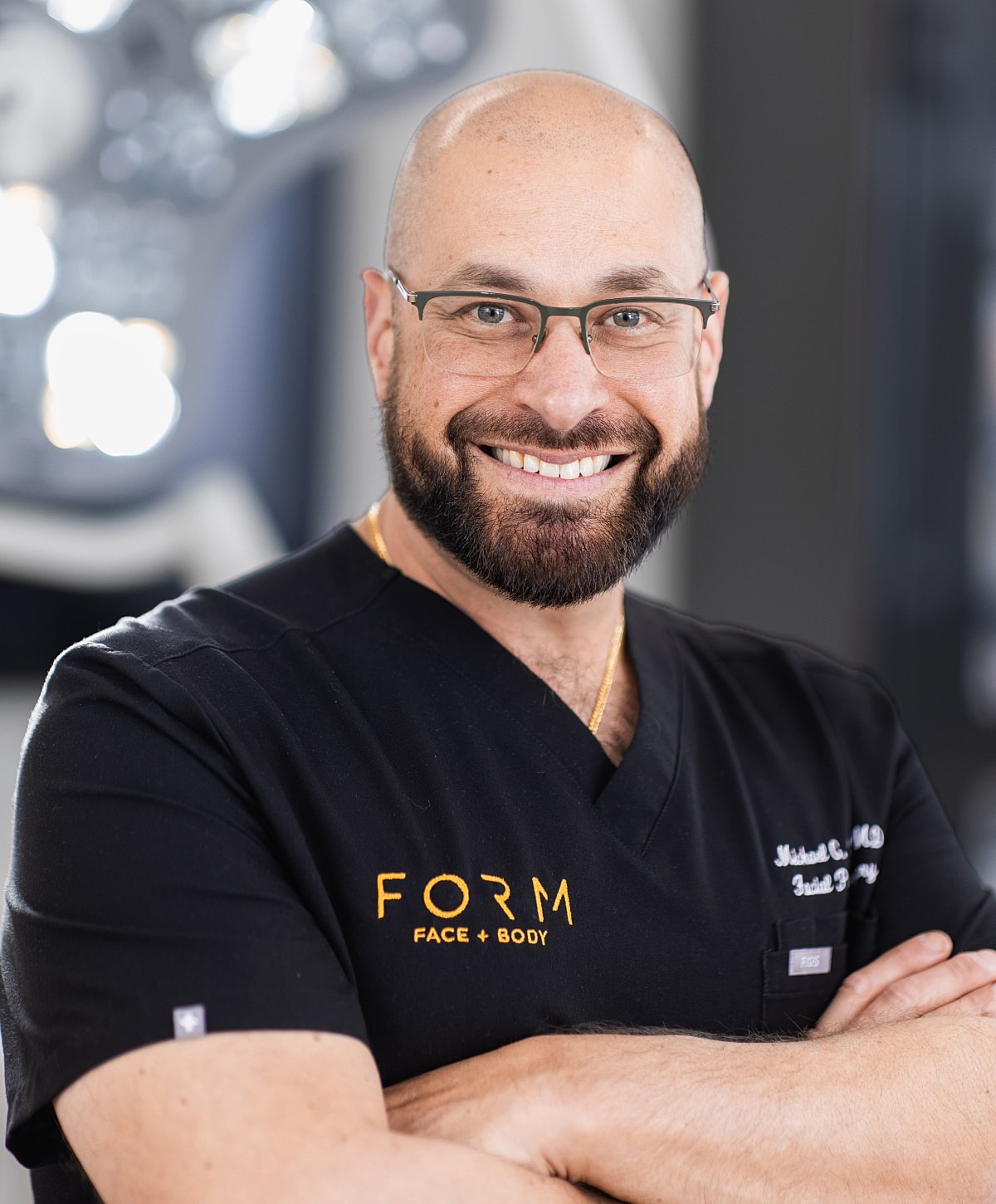
Dr. Michael Brandt is a Royal College-certified Otolaryngology – Head and Neck Surgeon specializing in facial plastic and reconstructive surgery. He is fellowship-trained in facial plastic surgery and serves as an Assistant Professor at the University of Toronto, where he contributes to surgical education and research.