Published
5 minute read
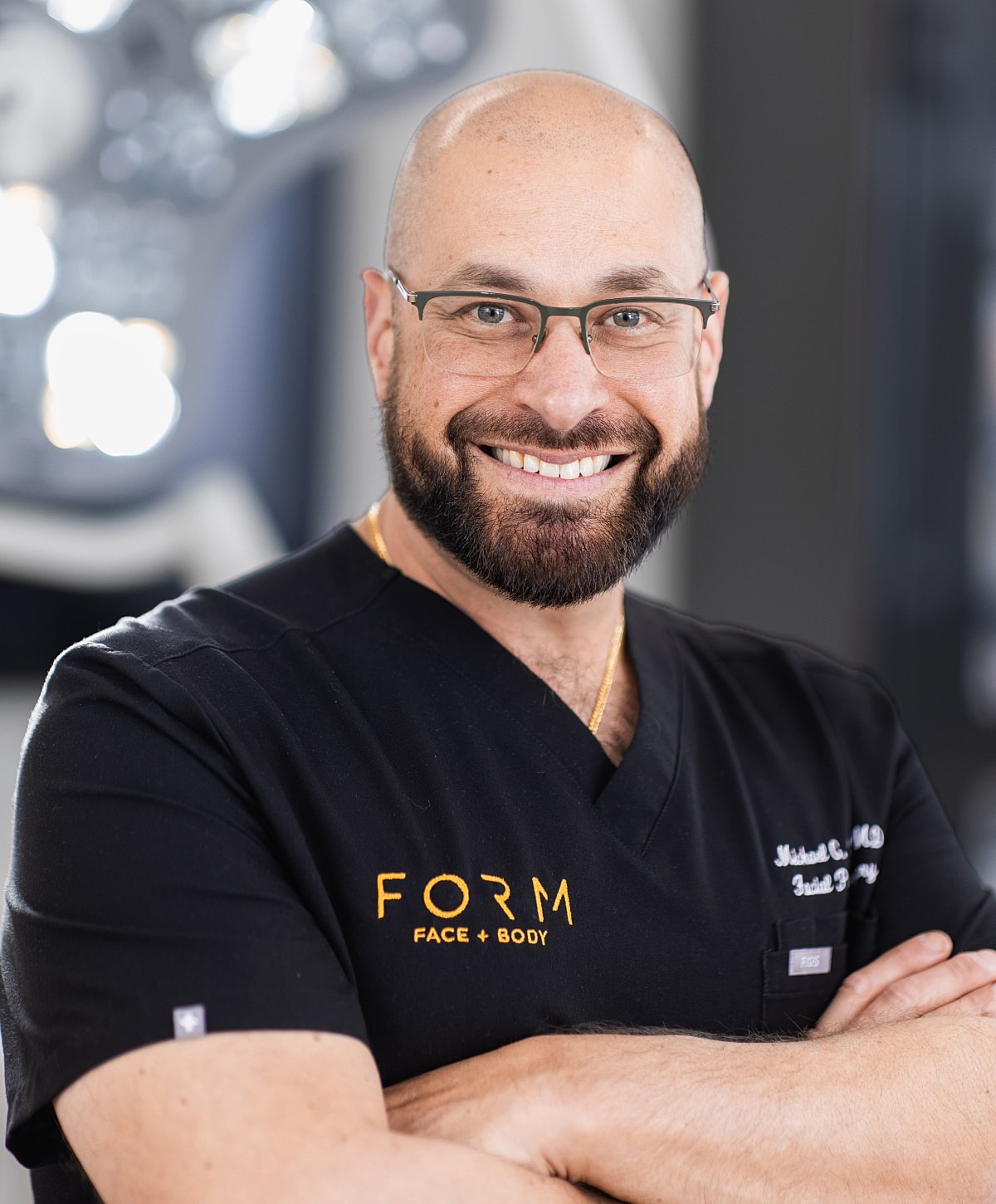
By Dr. Michael Brandt, Facial Plastic & Reconstructive Surgeon, FORM Face + Body, Toronto
Before you ask which facelift technique you need, how much it costs, or how quickly you can return to work, there is a question I would put first:
“What will this procedure actually change for me—and what won’t it?”
The second half matters just as much as the first.
You deserve a clear explanation of what surgery can reasonably accomplish, where its limitations lie, and whether the proposed treatment addresses what bothers you. That conversation is where I believe good facial plastic surgery begins.
Imagine looking at a photograph and thinking, “I look tired.” That description tells me how you feel about the image, but it does not yet tell me what to treat.
Are you noticing your eyelids? The shape of your jawline? Loose skin beneath your chin? Or several changes that have gradually become more noticeable?
My starting point is to understand which features concern you and what you hope will look different. You do not need to arrive knowing the name of an operation. Explaining what bothers you, in your own words, is more useful than trying to diagnose yourself from social media.
I also want to understand what you like about your face. Those features deserve a place in the conversation. A treatment plan should respect the appearance you want to preserve.
A facelift can improve changes such as jowling and sagging facial tissues.
It does not treat every sign of ageing. Eyelid concerns may require a separate assessment, while changes in skin texture or pigmentation may call for skin-directed treatment. A facelift also does not stop future ageing.
That does not mean every patient needs several procedures. It means we should identify the source of your concern before recommending a solution.
If your main concern falls outside what a facelift can reliably improve, I want that to be clear before you commit. Understanding the limits of an operation is part of deciding whether its benefits are worthwhile for you.
Deep plane. Mini facelift. SMAS plication. When you encounter these terms, it is reasonable to wonder which one you should choose.
My approach is to explain why I would recommend a particular technique for your anatomy and goals. The name alone is not enough information to make that decision.
For me, a bespoke plan means being able to explain what I intend to address, how I propose to address it, and what limitations remain. I want you to understand the reasoning well enough to ask questions about it.
You should feel comfortable saying, “Why is that your recommendation for me?” It is your face, and you deserve an answer you can understand.
If you tell me you want a natural result, I want to explore that with you. Are you hoping for a clearer jawline? Less heaviness through the lower face? A change that feels noticeable to you without making you feel unfamiliar to yourself?
Those details help turn a broad preference into a useful surgical discussion.
I would also ask what would feel like too much. You may have seen a result you dislike or worry about a particular feature changing. Bring that concern into the room. You do not have to hide your hesitation to be a suitable person for a consultation.
My goal is to work towards an outcome that respects your identity, with an honest discussion of what is achievable. No surgeon can guarantee an exact appearance.
The result is only part of what you are choosing. Surgery also involves recovery, follow-up and risks.
A facelift discussion should include potential complications such as bleeding, infection, scarring and nerve injury, alongside the factors that may affect your individual risk. You should also understand the expected recovery course and whom to contact if you have a concern.
Tell me about the realities of your life: work, caregiving, upcoming events and the support you have at home. A plan needs to make sense within those circumstances. If the timing is wrong, that is a reason to reconsider the timing.
My philosophy is to pursue safe, natural and lasting results. That starts with careful patient selection and a recommendation I can explain clearly, including when I would advise waiting or considering another approach.
If you are considering a facelift at FORM Face + Body in Toronto, you do not need to have made up your mind before meeting me. Bring your questions, your concerns and a sense of what you would like to change.
Book a consultation with me, to discuss what treatment could realistically offer you—and whether it is the right next step.
written by
Dr. Michael Brandt is a Royal College-certified Otolaryngology – Head and Neck Surgeon specializing in facial plastic and reconstructive surgery. He is fellowship-trained in facial plastic surgery and serves as an Assistant Professor at the University of Toronto, where he contributes to surgical education and research.