Published
8 minute read
For many patients with hooded upper eyelids, the main issue is excess upper-eyelid skin, and a carefully planned upper blepharoplasty can provide an excellent improvement without changing the position of the brow.
That is generally where my assessment starts.
A brow lift should not be added simply because someone has hooded eyes. If the brow has descended enough that it is meaningfully contributing to the problem, then it deserves to be addressed. But if the brow is reasonably positioned and the excess skin is primarily on the eyelid itself, upper blepharoplasty alone may be the more appropriate operation.
There is also a third issue that needs to be distinguished from both: true eyelid ptosis, where the upper-eyelid margin itself sits too low over the eye. That is a different anatomical problem and may require a different type of repair. [1]
The important question is therefore not, “Do I need a brow lift?”
It is: What is actually causing my hooded eyes?
Upper blepharoplasty removes an appropriate amount of excess skin from the upper eyelid and, when indicated, addresses underlying tissue such as protruding fat. [1]
For the right patient, this can uncover more of the natural upper-eyelid platform, reduce the sense of heaviness and create a cleaner, less hooded appearance.
The goal is not to make the eyelid look operated on.
I want to preserve the patient's natural eye shape and expression while removing the tissue that is creating the problem.
That requires restraint. Upper blepharoplasty is not about removing as much skin as possible. Enough skin must remain to allow comfortable eyelid closure and protect the surface of the eye. Excessive removal can contribute to problems with eyelid closure, or lagophthalmos, and ocular-surface symptoms. [1]
This is particularly important when someone also has a lower brow position. I would not try to compensate for significant untreated brow descent by simply removing additional eyelid skin.
I don't assess the eyelid in isolation.
I look at:
These structures are closely related, and careful preoperative evaluation should distinguish excess eyelid skin, brow position and true eyelid ptosis rather than treating them as the same problem. [1]
The forehead matters because some patients subconsciously raise their eyebrows to help lift heavy upper-eyelid tissue. This is called frontalis compensation. [1,2]
If I examine someone while they are actively holding their eyebrows up, I may underestimate how much the brow contributes to the appearance.
This is why trying to diagnose yourself by pushing your brow upward in the mirror has limitations. The brow, eyelid skin and eyelid margin need to be assessed together.
This is the situation I see frequently.
If the brow is in a reasonable position and excess upper-eyelid skin is the dominant cause of the hooding, I will often recommend upper blepharoplasty alone.
The operation directly treats the structure creating the problem without changing another part of the face unnecessarily.
I perform brow lifting selectively.
A brow lift becomes relevant when the position of the brow itself is a meaningful part of the hooding and addressing only the eyelid would leave an important component of the problem untreated. Brow position is therefore an important part of the assessment before upper blepharoplasty. [1]
That can occur when there is significant brow descent, particularly when the outer brow contributes to heaviness over the lateral upper eyelid.
In those patients, removing eyelid skin alone may improve the eyelid but not completely address the anatomy responsible for the heavy appearance.
Occasionally, the right answer is therefore to combine an upper blepharoplasty with a brow procedure.
But I do not believe that hooded eyes automatically justify operating on the brow.
My preference is to do the least surgery required to achieve a natural, balanced result.
This is an important distinction.
Dermatochalasis refers to excess eyelid skin.
Brow ptosis refers to descent of the eyebrow.
Eyelid ptosis refers to a low position of the upper-eyelid margin itself. [1]
They can look similar to a patient looking in the mirror, and more than one can be present at the same time. Upper-eyelid ptosis can coexist with dermatochalasis and should specifically be assessed before blepharoplasty. [1]
If the eyelid margin sits abnormally low, removing skin alone may not adequately address the problem. In that situation, the eyelid-opening mechanism needs to be evaluated separately.
That is one reason I view upper-eyelid surgery as an anatomical diagnosis rather than simply a cosmetic skin-removal procedure.
Upper blepharoplasty can produce a long-lasting improvement, but it does not stop the ageing process.
Skin quality continues to change. The brow can change. Facial tissues continue to age.
I therefore avoid giving patients a specific number of years and suggesting that everyone will have the same duration of benefit.
The same principle applies to brow lifting.
Studies demonstrate that brow elevation can persist after surgery, but published results vary according to technique, fixation method, follow-up duration, patient anatomy and how brow position is measured. Some settling over time does not necessarily mean that the entire benefit has been lost. [2–4]
Importantly, the brow-lift literature includes different operations and measurement methods, so results from one technique should not automatically be extrapolated to every other technique. [2–4]
For me, that is another reason not to add a brow procedure unless it is actually contributing something meaningful to the result.
Sometimes they can play a supporting role, but they treat different problems.
Neuromodulators can alter the balance of muscles around the brow and may produce a subtle change in brow position in appropriately selected patients. They are not equivalent to surgically repositioning a significantly descended brow. [5]
Laser resurfacing can improve aspects of periorbital skin quality, including fine lines and photodamage. It does not remove substantial excess upper-eyelid skin or surgically reposition a descended brow. [5]
These treatments may complement eyelid surgery, but they should not be presented as interchangeable solutions to structural problems.
Upper blepharoplasty is commonly performed, but it is still surgery.
Potential issues include bruising, swelling, temporary dry-eye symptoms, asymmetry, under-correction, over-correction and difficulty closing the eyes if too much tissue is removed. Serious complications such as bleeding behind the eye and vision-threatening injury are uncommon but important. [1]
Brow procedures have their own risk profiles, which vary according to the technique used. Potential considerations include altered sensation, asymmetry, visible or widened scars, hairline changes, weakness and recurrent descent. [2–4]
The decision to add another procedure should therefore have a clear anatomical reason behind it.
Often, no.
If excess upper-eyelid skin is the main problem and the brow is appropriately positioned, a thoughtfully performed upper blepharoplasty may be all that is needed.
If brow descent is materially contributing to the hooding, then I will discuss addressing the brow as well.
And if the actual eyelid margin is low, we need to determine whether eyelid ptosis is part of the problem.
At FORM Face + Body in Toronto, my approach is to evaluate all three possibilities rather than assuming that hooded eyes require a particular operation.
The goal is not to do more surgery.
It is to identify the anatomy responsible for the concern and choose the procedure, or combination of procedures, that addresses it while preserving a natural appearance.
A consultation and examination are required to determine which treatment, if any, is appropriate for an individual patient. This article is educational and is not a substitute for individual medical assessment.
written by
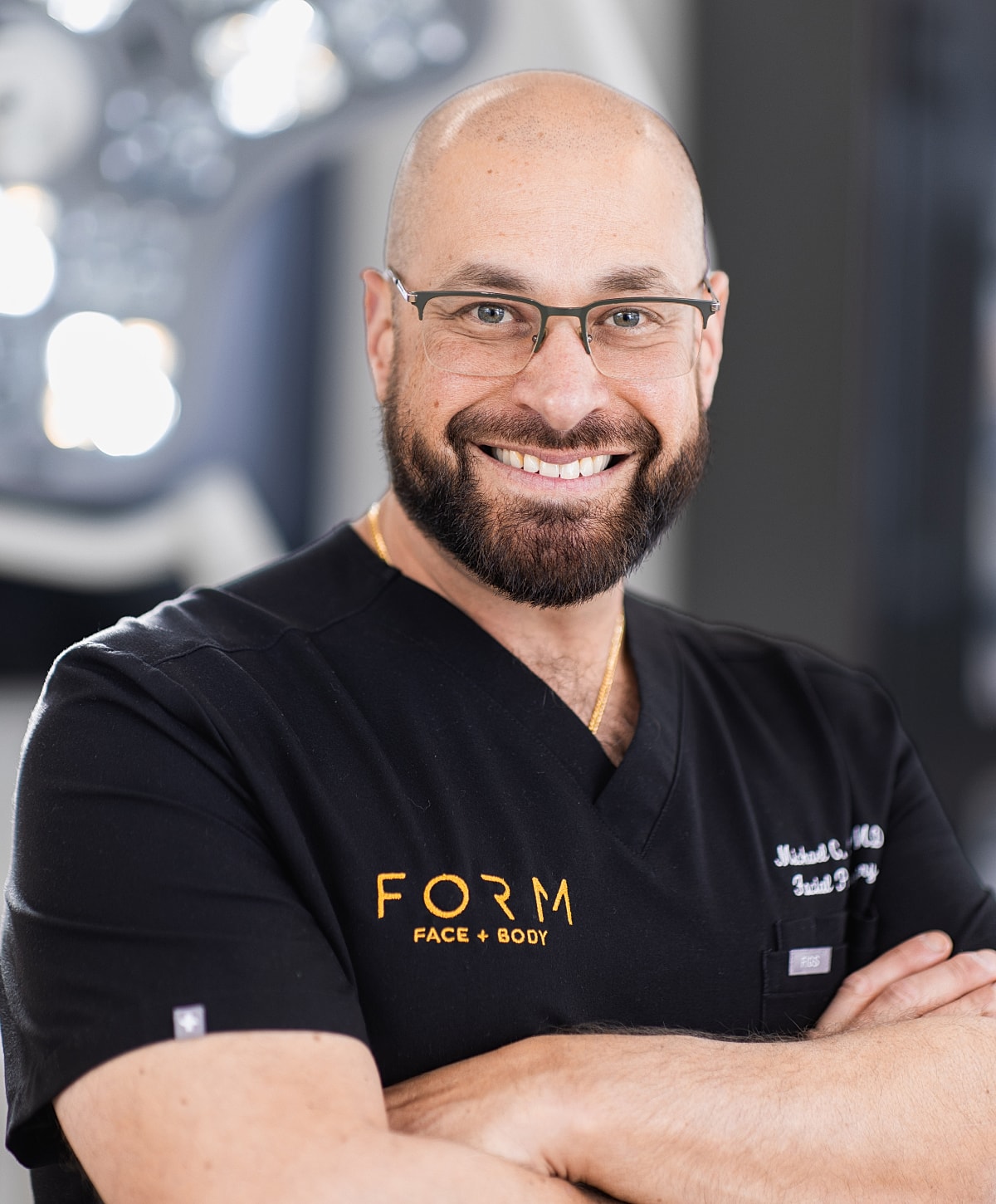
Dr. Michael Brandt is a Royal College-certified Otolaryngology – Head and Neck Surgeon specializing in facial plastic and reconstructive surgery. He is fellowship-trained in facial plastic surgery and serves as an Assistant Professor at the University of Toronto, where he contributes to surgical education and research.