

Published
6 minute read
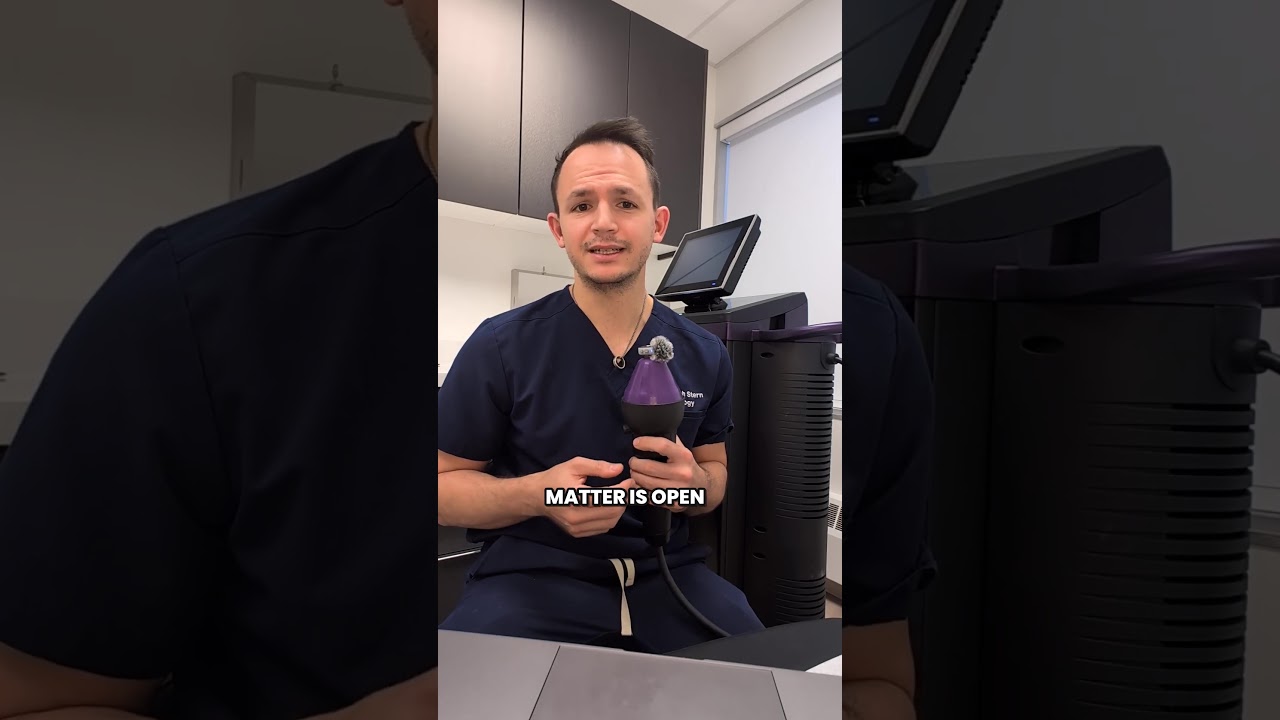
Men ask me about shockwave therapy for erectile dysfunction (ED) all the time, usually after seeing it advertised. It has been studied for years, and doctors still disagree about how it works and how well.
Here’s what the research says, and how we use it.
What is shockwave therapy?
It uses gentle sound-wave pulses applied to the penis over several sessions. The idea is that the pulses encourage the tissue to repair itself, grow tiny new blood vessels, and improve the lining of the blood vessels, so more blood can flow when it’s needed, resulting in stronger, longer, erections.
That’s the theory. Researchers are still testing whether it happens in men, and whether it’s enough to make a difference.
What does the research show?
The fairest way to test a treatment is to compare it with a fake one. Men are randomly assigned to the real treatment or a “sham” treatment that feels similar but delivers no energy.
A 2025 Cochrane review, which combines the results of many studies, looked at 21 of these trials with 1,357 men. Most had mild to moderate ED. The reviewers found that shockwave may help a little in the short term and may help over the longer term. They also said the short-term gain may be too small for men to notice, that they had low confidence in the evidence, and that several of the studies were paid for by device makers.
A 2026 review of 19 trials found a similar picture. The improvements were real in the statistical sense, meaning they were unlikely to be chance. But in most of the studies they were smaller than what a man would actually notice day to day. The authors said it’s still unclear whether shockwave makes a meaningful difference.
In plain terms, the treatment seems to do something measurable, and whether it does enough to matter is still an open question. That’s why I think patient selection matters: finding the right patient for the right treatment.
Why is it still being studied?
A few reasons. It doesn’t involve surgery or a daily medication, and the risks are quite low.
Shockwave is one of the regenerative approaches that has been tested in randomized trials, which is part of why it’s seen as promising. The studies differ a lot, though, in how they give the treatment. The 2026 review linked how often the treatment was given, and the number of pulses in a course, to how well men responded, which suggests the exact method may matter.
Doctors are still working out who is most likely to benefit and how the treatment is best delivered, and that includes us.
Most of the men in these studies had milder ED, so the results may not apply to everyone. The reviews also mostly compared shockwave with sham treatment, so they don’t directly tell us how well it works alongside other treatments, which is how we use it at FORM.
How do we use it?
At FORM, we built our approach from several lines of research.
Daily tadalafil (Cialis). Two small studies tested shockwave together with a low daily dose of tadalafil. In a 2024 study of 51 men with severe ED who only partly responded to tablets, the men who got real treatment plus daily tadalafil scored better on erectile function than the men who got fake treatment plus daily tadalafil. But the two groups had about the same success rate with actual attempts at sex. An earlier study of 50 men with milder ED found a bigger improvement with the combination than with shockwave alone, but the results weren’t consistent across every measurement. Both studies were small and short. Both treatments work on blood flow, so combining them makes sense on paper. I see it as a reasonable approach that needs larger studies.
An injection during treatment. We also give a small injection that produces an erection during the session. The reason comes from a 2024 simulation by Irwin Goldstein and colleagues, which found that the tissue absorbs more of the shockwave energy when the penis is erect. Our thinking is that more energy may reach the tissue.
That’s an educated guess based on a computer model, not a result in men. The simulation used one specific device, and some of its authors have financial ties to the manufacturer, which they disclose. I’m not aware of a study that compares shockwave with and without the injection, so I can’t tell you it makes a difference. The injection also has risks, including an erection that won’t go away and needs urgent care (Cleveland Clinic Consult QD), and we go over those before anyone starts.
So, is it worth it?
My view is that shockwave is a reasonable option for the right man, but it isn’t a first-line treatment. For helping erections today, tablets and, for some men, injections have stronger evidence.
Who is the right man for shockwave?
Given how modest the average result is, who you are matters. Based on who was in the studies and how we use the treatment, the man I have in mind:
Shockwave is less likely to be the right choice if your ED has a cause it won’t address, such as nerve damage after prostate surgery, low testosterone that hasn’t been treated, or stress and anxiety. In those cases, treating the cause comes first. And if you’re looking for a quick fix or a guaranteed result, this isn’t it.
I can’t promise a result, and that includes our approach. Wherever you go, it’s reasonable to ask what the evidence is for your situation and what the plan is if it doesn’t help.
written by
Dr. Noah Stern is a fellowship-trained urologist specializing in men's sexual health, hormonal optimization, and reconstructive urology. His approach focuses on identifying underlying health concerns and developing individualized treatment plans to support men's overall health and well-being.