Published
8 minute read
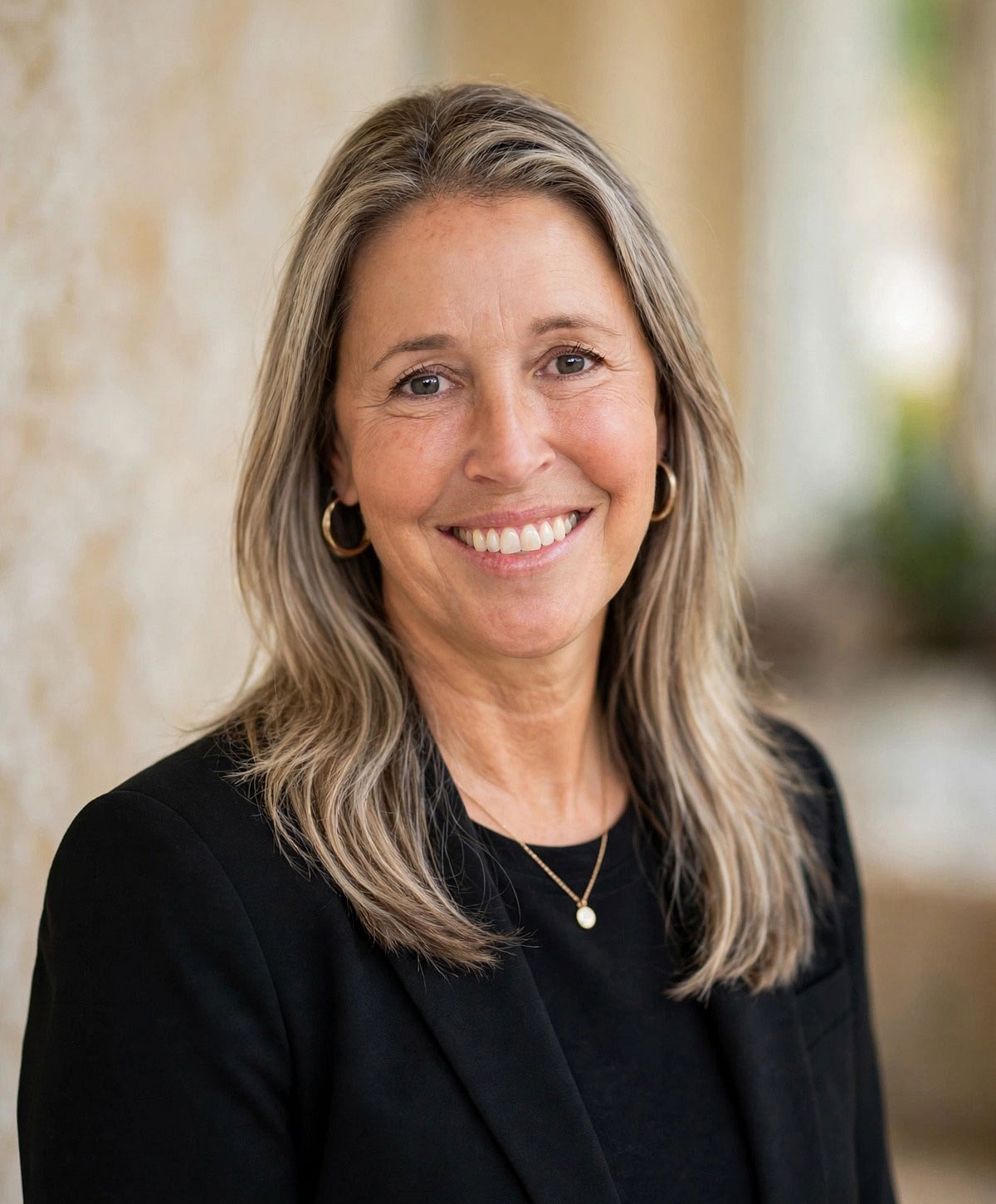
Written by Taly Fleischer, MBA, ICF-certified performance coach and founder of Taly Fleischer & Company, Performance Coach with Life + Longevity.
Recently I met with a client who had just come back from a week away. She is excellent at her work, trusted by the people around her, and the kind of person others assume has it handled. She told me she had not brought a laptop on the trip, yet she had still found a way to check her messages every day. Then she described her first morning home. She woke with her chest tight, already exhausted, feeling as though the walls were closing in. The day had not started, and her body had already decided it was an emergency.
What stayed with me was how ordinary it was. Nothing dramatic had happened that morning. She had simply been running on pressure for long enough that her body no longer waited for a reason. So we did not start with her to-do list. We started with her body, with slowing down and noticing where she was holding tension, and she left understanding that the calm she wanted had never gone anywhere. She could return to it whenever she chose.
I have seen versions of that morning for more than 30 years, and I have come to believe it is one of the most overlooked health conversations in working life. We talk about sleep, nutrition and exercise. We rarely talk about what pressure is doing to the person who is carrying it.
A person under sustained pressure rarely announces it. It appears in how they sleep, in how much patience they have left at the end of the day, and in the decision they would once have made in a minute and now find themselves circling for a week. The research points the same way. A joint analysis by the World Health Organization and the International Labour Organization found that working 55 or more hours a week is associated with a 35% higher risk of stroke and a 17% higher risk of dying from ischemic heart disease, compared with a 35 to 40 hour week [1]. Hours are only one measure of pressure, but the finding is a reminder that how we carry our responsibilities is a health question as much as a performance one.
That is why I am glad to be part of a place that takes longevity and wellness seriously. Adding years to a life is a worthy goal, and how a person meets pressure decides what those years feel like.
The people who reach out to me are rarely falling apart. Some lead companies or teams inside organizations. Others lead in their own lives, at the centre of a family, in their community, in a business they built themselves, or in a chapter they are still working out. After more than 30 years of working with leaders, I have learned that leadership is not a job title, and the pressure that comes with it does not care what yours is.
They are capable, respected and often admired, and from the outside they look like people who have it figured out. What they tell me, usually a few minutes into our first conversation, is quieter than a crisis. The effort it takes to perform at this level keeps rising, and the satisfaction that used to come with it has not kept up. Many have made a change on the outside, with FORM or elsewhere, and want to feel just as strong on the inside. They describe running on pressure, and they are very good at it, which is exactly the problem. Pressure works well enough that nobody around them, and often not even they themselves, thinks to question it.
People are investing in their physical health, and the inner side is catching up. Many of the people I work with track their sleep, train consistently and see the right specialists. Far fewer give the same attention to the inner conditions that shape how they perform. It is entirely possible to have an excellent resting heart rate and still lie awake at three in the morning rehearsing a conversation. The gap between those two investments is where I tend to do my best work.
The old advice is no longer enough. For years the answer to feeling overloaded was to manage time better, delegate more and work smarter. Those are useful skills, but in my experience the real constraint is rarely skill. It is the state a person is in when the decisions get made, and a depleted person will make a depleted decision no matter how good their calendar system is. One leader I coach prepares thoroughly for every meeting. When a senior executive put him on the spot, he answered defensively anyway, and within minutes he could see it had come across as complaining. His preparation was never the problem. The state he answered from was.
Responsibility is heavier than it looks. At every level, the people who are relied on most often have the fewest places to think out loud. A manager needs to seem certain for their team, a founder confident for their investors, a parent steady for their family. Very little space is left to say, honestly, that they are tired or unsure. Several leaders I have coached this fall felt least sure of themselves in front of senior leadership, especially after a reorganization, which is exactly where they felt they could least afford to show it.
What I help people build is confidence and self-trust, calm and clear thinking when it counts, better decisions and healthier boundaries, stronger relationships at work and at home, and a renewed sense of direction.
A senior executive I coached describes the difference this way:
Taly's coaching propelled me from a role where I felt uncertain about my fit to one where I became incredibly impactful within the organization. Taly played a pivotal role in helping me resolve a major conflict between opposing parties and navigate challenging conversations with fellow executives.
Senior Executive, Shopify
I first met Dr. Ron Somogyi at a hockey rink, where our sons played together for years, and for a long time we talked about everything except work. The relationships that matter usually begin that way, and it is why I believe this work belongs alongside the care FORM already provides. My own path began inside organizations including the Toronto Star, BMO Financial Group, Deloitte, Shopify and LHH. I studied psychology at McGill and completed my MBA at Ivey, which gives me two lenses: how people work and how businesses work.
At FORM, my offering is performance coaching, and it sits within FORM's Longevity and Wellness programme. FORM changes how you look and feel. Coaching changes how you think, decide and show up, so the change holds. It is private, one-to-one work over six months. It begins with an Enneagram assessment and a detailed personal report, a clear map of how you are wired and what has been getting in your way. From there, I call my approach the Expanded State Method, and the work moves through three stages: seeing what is really driving you, bringing your body, mind and emotions into line, and acting from a steadier, stronger place. I call those stages Clarity, Coherence and Capacity.
There are two ways to work together. The Partnership is for anyone ready for lasting change in how they feel, connect and live: nine one-to-one sessions, with support between them when you need it. The Immersion is for leaders and founders balancing personal life with the pressure of growing an organization: twelve longer sessions, notes after each one, and unlimited access to me, including my AI coaching tool. It is by application, with room for only five clients at a time.
There are three ways to begin. Through Life+ Foundation, your program includes a complimentary session with me, and you can continue into either program at a preferred rate. With the Longevity Continuum, you can add either program to your Continuum at a preferred rate. Or you can begin on its own, starting with a complimentary first session to find the right fit. Not sure which fits? That is what your complimentary session is for.
With FORM, I am also hosting four complimentary evenings in The Nucleus at 90 Eglinton Avenue East. Each runs 90 minutes and is interactive rather than a lecture, so you can bring a real situation and leave with a skill you can use the next day. The first is The Confidence Gap, on Monday, December 14, 2026, for anyone whose outside has changed but whose inside has not quite caught up. The series continues on March 1, May 6 and June 15, 2027.
If anything here sounds familiar, I would love to hear from you. I offer a complimentary first session, my Strategic State Clarity Call, a conversation about what you are carrying and whether working together makes sense. You can book time on my calendar.
Pressure is not the enemy. Carrying it without a way to turn it into something useful is. That is the shift I help people make, from pressure to power, and I am looking forward to doing more of it here.
Reference
[1] World Health Organization and International Labour Organization, "Long working hours increasing deaths from heart disease and stroke," May 17, 2021. who.int
written by
Taly Fleischer is a performance coach with over 30 years of experience helping leaders and professionals build confidence, manage pressure, and improve their overall well-being. As the founder of Taly Fleischer & Company and a Performance Coach with Life + Longevity at FORM Face + Body, she helps individuals strengthen their mindset, decision-making, and personal and professional lives.