Published
6 minute read
This is the question I get within about ninety seconds of the topic coming up, and it is the right question. Body contouring technology has a long history of being oversold. So here is the mechanism, the evidence, and the parts of the evidence that are weaker than the marketing suggests.
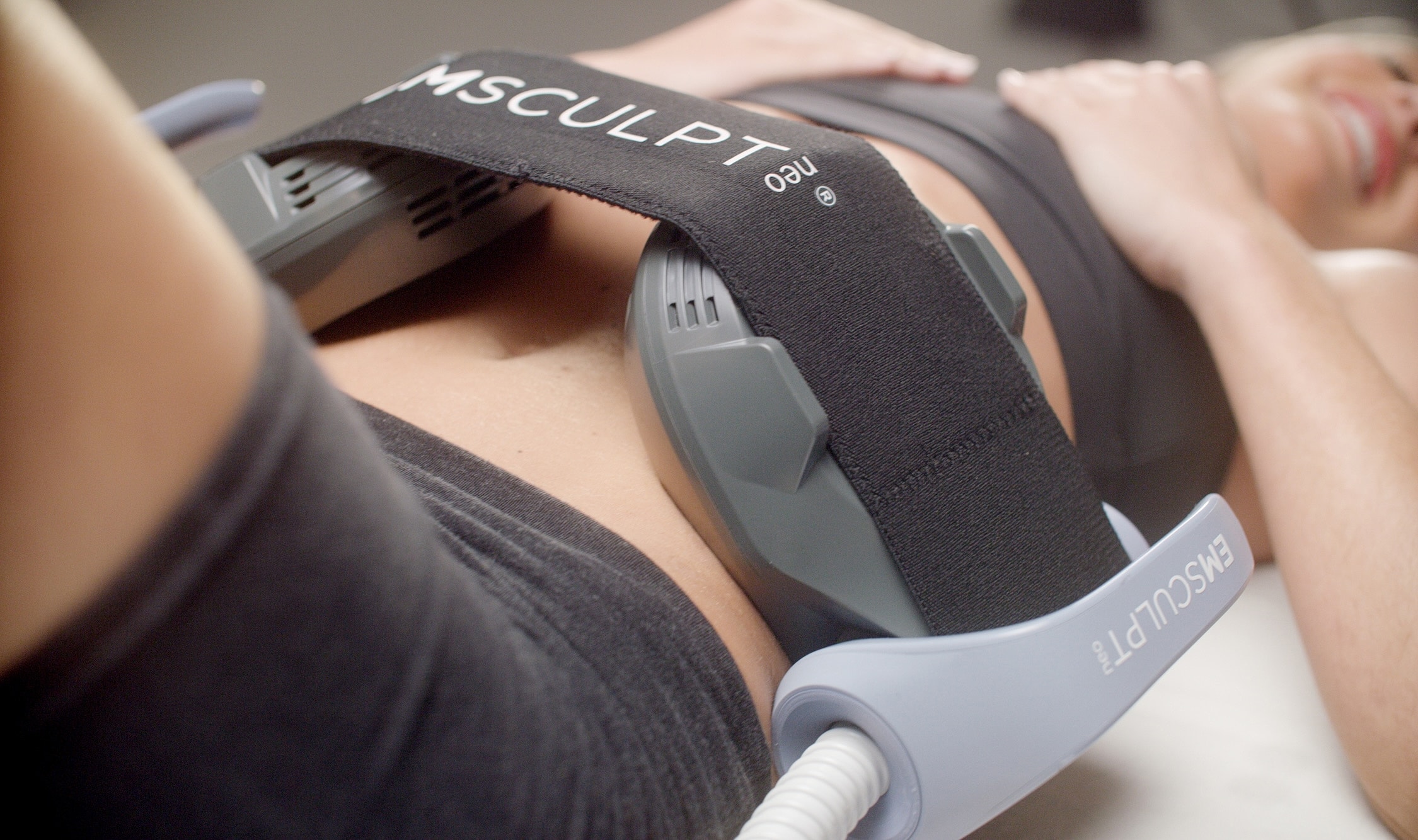
EMSculpt uses high-intensity focused electromagnetic energy, usually shortened to HIFEM. The applicator sits on the skin and generates a magnetic field that depolarizes the motor neurons supplying the muscle underneath. The muscle contracts, but not the way it contracts when you decide to contract it.
Voluntary contraction is limited by your nervous system, which holds back a reserve and will not let you fully recruit and fully contract at will. HIFEM bypasses that limit and produces supramaximal contractions at a frequency and completeness you cannot generate on your own. A session is thirty minutes, and the muscle performs a number of contractions that no equivalent amount of training could match.
The newer EMSculpt NEO adds synchronized radiofrequency, which raises the temperature of the overlying fat to a level that causes fat cell breakdown while the muscle is being worked. That is why the NEO addresses both tissues in one session.
Critically, this is a tissue-level intervention and not a weight-loss intervention. It is worth being clear about that before looking at any numbers.
The most informative work here is histologic rather than cosmetic. In a controlled study of treated muscle, HIFEM produced a 20.6% increase in muscle mass density, driven primarily by fibre hypertrophy, with new fibre formation contributing a smaller amount that did not reach statistical significance (Aesthetic Surgery Journal / PMC). Widespread new blood vessel formation was also observed in treated tissue.
That matters because it establishes the effect is a real structural change in the muscle, of the same broad type that resistance training produces, rather than temporary swelling or a transient tone effect.
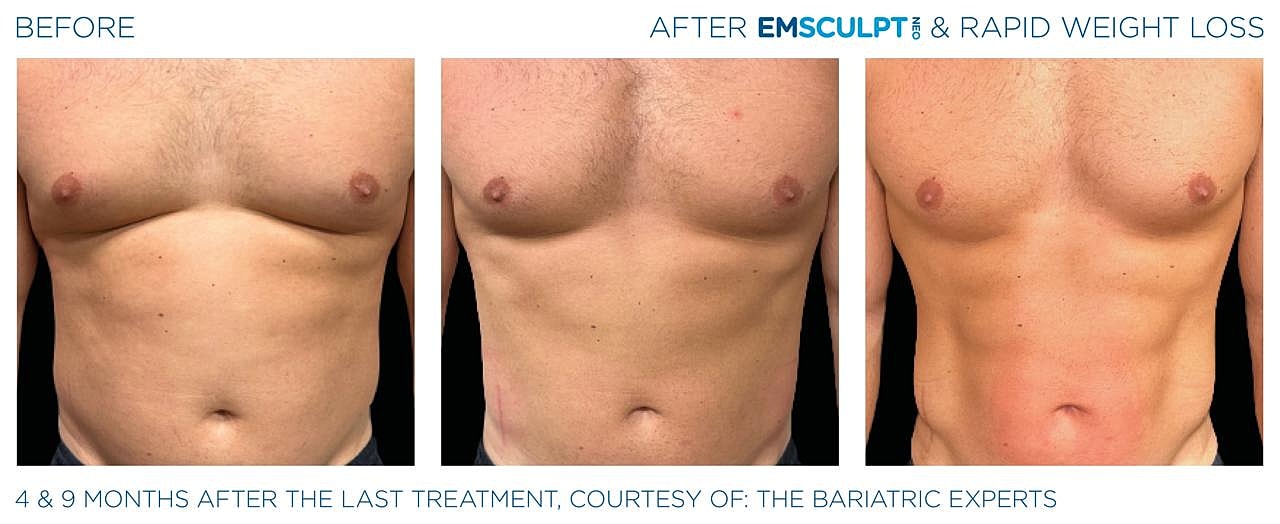
This is where the better-quality imaging work is useful. A multicentre study rescanned patients an average of eleven months after they finished a course of abdominal treatments, using MRI and CT read by a single blinded radiologist. At one year, abdominal muscle thickness was 19.05% above baseline, subcutaneous fat thickness was 14.63% below baseline, and abdominal separation was reduced by 10.46%. None of those had drifted meaningfully from the six-week measurements (Aesthetic Surgery Journal).
Two details in that study are worth more attention than the headline percentages. First, all twenty-one patients showed increased muscle thickness, which is unusually consistent. Second, body weight did not change significantly in either direction, which confirms what I said above: this is a change in the tissue, not the scale.
Here is the part that tends to get left out.
A systematic review pooling 191 patients across studies from 2019 to 2022 found the mean changes were real but modest in absolute terms: about 5.5 mm of fat thickness reduction and 2.2 mm of muscle thickness increase. The pooled reduction in muscle separation of 2.9 mm was not statistically significant across the group (Journal of Cosmetic Dermatology / PMC). The mean study size was 26 patients.
A second systematic review graded the overall body of evidence at Level II, noting that most studies are open-label without control groups and that follow-up is typically one to six months (Aesthetic Plastic Surgery / PubMed).
So: the direction of effect is consistent across studies and the safety record is good, with no complications reported across these reviews. But the studies are small, mostly uncontrolled, and the changes are measured in millimetres. Millimetres matter a great deal for how a muscle functions. They matter less for dramatically reshaping a silhouette. Anyone implying you will get a surgical-grade change from this is overstating it, and if a wide separation or loose skin is the actual problem, surgical repair remains the honest answer.
The functional data is stronger and more interesting than the cosmetic data, and it is the reason we brought the technology in.
In a study of adults aged sixty to seventy-five treated across the abdomen and pelvic floor, measured core strength rose 33.7% at three months and waist circumference fell 3.1 cm. Eighty-nine percent found it easier to rise from a seated position and seventy-six percent reported better performance of daily activities, with most also reporting improved posture, stability and back discomfort (Journal of Geriatric Medicine and Gerontology).
On the pelvic floor, HIFEM has produced roughly a 52% improvement in validated incontinence scores after six sessions, improving further at one month, with about a quarter to a third of patients scoring zero symptoms (International Urogynecology Journal / PMC).
Getting out of a chair, standing straighter, a back that tolerates a full week, not planning your day around a bathroom. Those are outcomes worth having, and they are better documented than the contour change.
Where published evidence is strong, we follow it. Where it is thin, as it is for some of the newer applications and protocols, we say so, we reason from the mechanism, we discuss it as a group across disciplines, and then we measure our own patients to confirm the effect we intended is the effect we get. Circumference, functional markers, symptom scores and imaging where clinically warranted. When our own data disagrees with the published averages, our protocol changes.
That is the only way I know to use a technology like this responsibly: neither dismissing it because the literature is imperfect, nor overselling it because the mechanism is elegant.
Yes, it works, within limits that are worth understanding. It reliably makes muscle thicker and stronger, and that effect holds at a year. It modestly reduces fat over the treated area. It will not replace surgery, it will not change your weight, and it will not do much for skin. The functional benefits are the most consistent and, for most of our patients, the most valuable.
Whether it is the right tool for what you specifically want is an assessment question, not a marketing one. We will tell you plainly if it is not.