Published
7 minute read
If you get Botox, filler or another injectable treatment in Ontario, there is one question you should know the answer to:
Who is medically responsible for your care?
That matters because cosmetic injections are still medical treatments. They may be elective, but they involve prescription products, needles, facial anatomy and, in rare cases, serious complications.
Ontario is now tightening the rules around how nurses provide aesthetic treatments.
In September 2026, the College of Nurses of Ontario approved new standards for aesthetic nursing. These changes come into effect on March 1, 2027. [1]
The goal is simple:
to make sure patients are properly assessed, treatments are properly ordered, and nurses are not left practising in isolation.
I think that is the right direction.
The biggest change is that nurses providing certain aesthetic treatments will need a patient-specific order.
In plain language, that means the medical order should be written for you, not simply based on a broad standing rule that applies to many patients.
Before an order is given, an authorized medical professional must assess the patient. [1]
That may sound like a small change, but it is important.
Aesthetic medicine is not one-size-fits-all.
Two people asking for Botox may need completely different treatments. One person may not be a good candidate at all. The same is true for filler.
The new rules are pushing clinics toward a safer model: assess the actual patient first, then decide what treatment makes sense.
Because the safest treatment starts with the right diagnosis and plan.
A nurse injector may be highly skilled. Many are.
But a strong aesthetic clinic should have more than an injector with a syringe.
There should be a clear medical structure around that treatment.
Patients should know who is assessing them, who is authorizing the treatment, who is supervising the clinical team and who is available if something goes wrong.
The new Ontario standards are meant to make those relationships clearer and safer.
They also place tighter rules around delegation. In some situations, if a nurse delegates an aesthetic procedure to someone who is not independently authorized to perform it, the nurse must remain onsite for the entire procedure. [1]
The message is straightforward:
Cosmetic medicine still needs proper medical oversight.
No.
There are excellent nurse injectors in Ontario.
There are also physicians who may have very little experience with cosmetic injections.
The title alone does not determine quality.
What matters is training, experience, anatomy knowledge, judgment, and the system the injector works within.
Good injectors know not only how to inject, but also when not to inject.
They know how to recognize a problem early.
And they know when they need help.
That is where supervision matters.
For patients, the phrase “medical director” can sound reassuring.
But it is worth asking what that really means.
Is the doctor actually involved in the clinic?
Do they perform cosmetic injections themselves?
Do they understand the products being used?
Can they assess a patient if there is a concern?
Are they available to the nurse injector?
Do they help guide treatment plans and manage complications?
Those questions matter more than simply seeing a physician’s name on a website.
At FORM Face + Body, our non-surgical aesthetic program is physician-led.
I actively perform injectable treatments myself. I see patients, use neuromodulators and fillers, review treatment plans with our nursing team and provide direct clinical oversight.
I also teach aesthetic medicine nationally and internationally.
For me, supervision is not administrative.
It is part of my day-to-day clinical practice.
Because injectable treatment is more complicated than it looks.
The act of placing a needle into the face is not the difficult part.
The harder questions are:
Should this person be treated at all?
Where should the product go?
How much is enough?
When should we stop?
And sometimes:
Is filler even the right treatment?
A patient may come in asking for filler, but their real issue may be skin laxity, brow position, eyelid skin, facial descent or another anatomical change that filler cannot properly correct.
Sometimes more product is not the answer.
Sometimes surgery is the better option.
Sometimes no treatment is the right choice.
That is why I believe aesthetic medicine should be based on anatomy and diagnosis, not on selling syringes.
Cosmetic medicine has grown quickly.
Botox, fillers and other treatments are now offered in many different settings, including medical clinics, med spas and independent nursing practices.
As the field has grown, regulators have become more focused on making sure the medical standards around these treatments keep pace.
The College of Nurses of Ontario has specifically said that aesthetic services can carry real risks and that stronger rules are needed around assessment, orders and delegation. [1]
The College of Physicians and Surgeons of Ontario has also strengthened its expectations around how physicians supervise and delegate medical acts. It has made it clear that delegation is meant to extend a physician’s care, not replace the physician entirely. [2]
That is an important point.
Patients should not have to wonder whether there is actually a medical professional involved in their treatment.
It means you should feel comfortable asking a few simple questions.
Who is medically responsible for my care?
Who has assessed me?
Who is authorizing this treatment?
Is the supervising doctor involved in the clinic?
Does that doctor actually practise aesthetic medicine?
What happens if there is a complication?
A good clinic should be comfortable answering those questions clearly.
You should also feel comfortable hearing the word no.
If every consultation ends in treatment, that is worth questioning.
Good aesthetic medicine sometimes means recommending less.
At FORM Face + Body, our philosophy has always been that medical aesthetics should be practised like medicine.
That means assessing the patient before treating them.
It means experienced nurses working within a medical team.
It means having a physician who actively injects, understands the treatments being offered and is directly involved in the program.
It means discussing complications before they happen and knowing how to manage them if they do.
And it means understanding the limits of injectables.
I do not think these new rules are about making it harder for nurses to practise.
I think they are about making aesthetic medicine safer for patients.
That is a good thing.
The strongest aesthetic practices should not depend on one person working alone.
They should be built around a team, clear responsibility and easy access to medical expertise.
At FORM, that is how we already practise.
The patient should never have to wonder who is responsible for their care.
Injectable treatments carry risks and are not appropriate for every patient. Individual assessment is required to determine whether treatment is appropriate and who should provide it. This article is educational and is not a substitute for personal medical advice.
written by
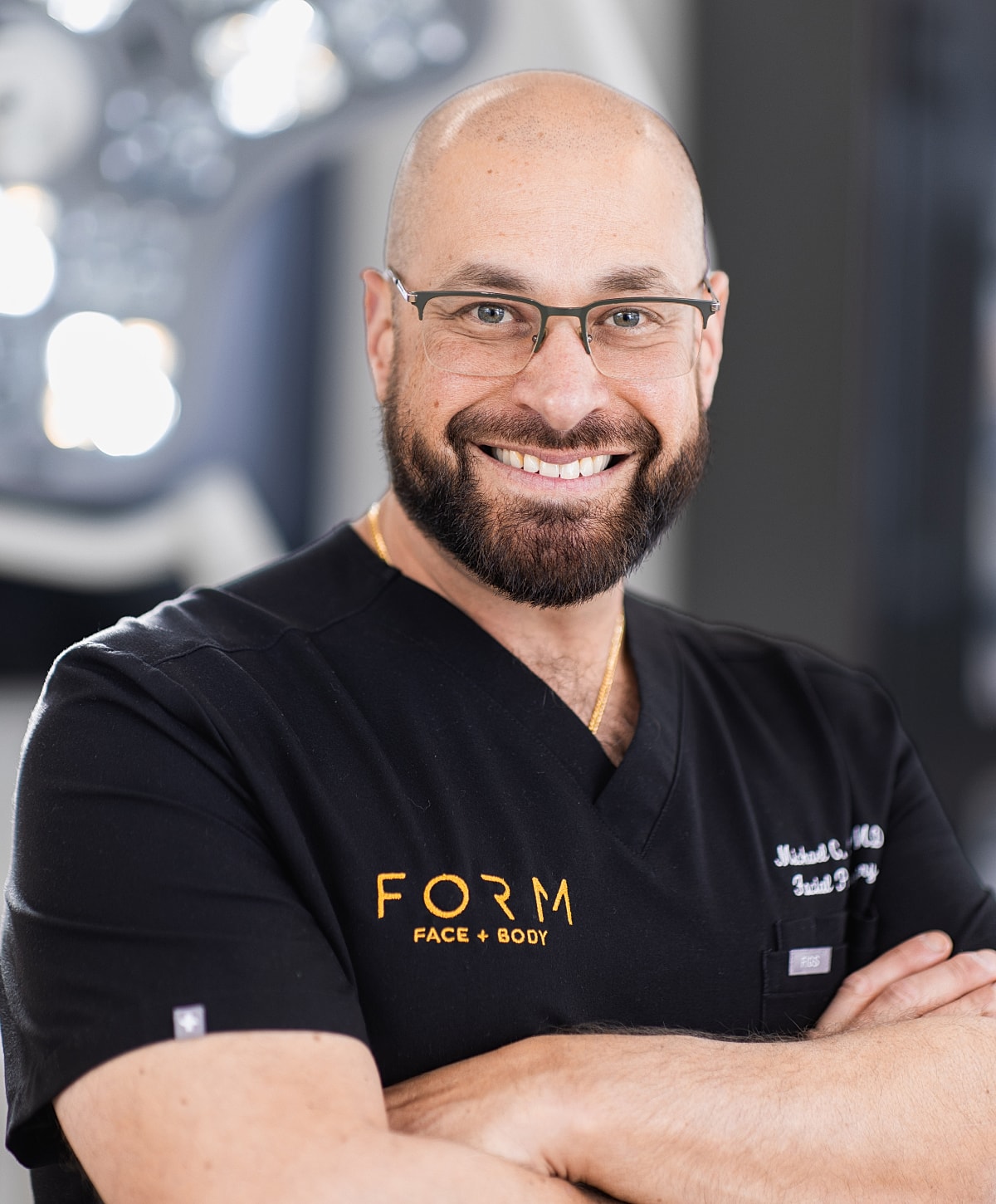
Dr. Michael Brandt is a Royal College-certified Otolaryngology – Head and Neck Surgeon specializing in facial plastic and reconstructive surgery. He is fellowship-trained in facial plastic surgery and serves as an Assistant Professor at the University of Toronto, where he contributes to surgical education and research.