Published
15 minute read
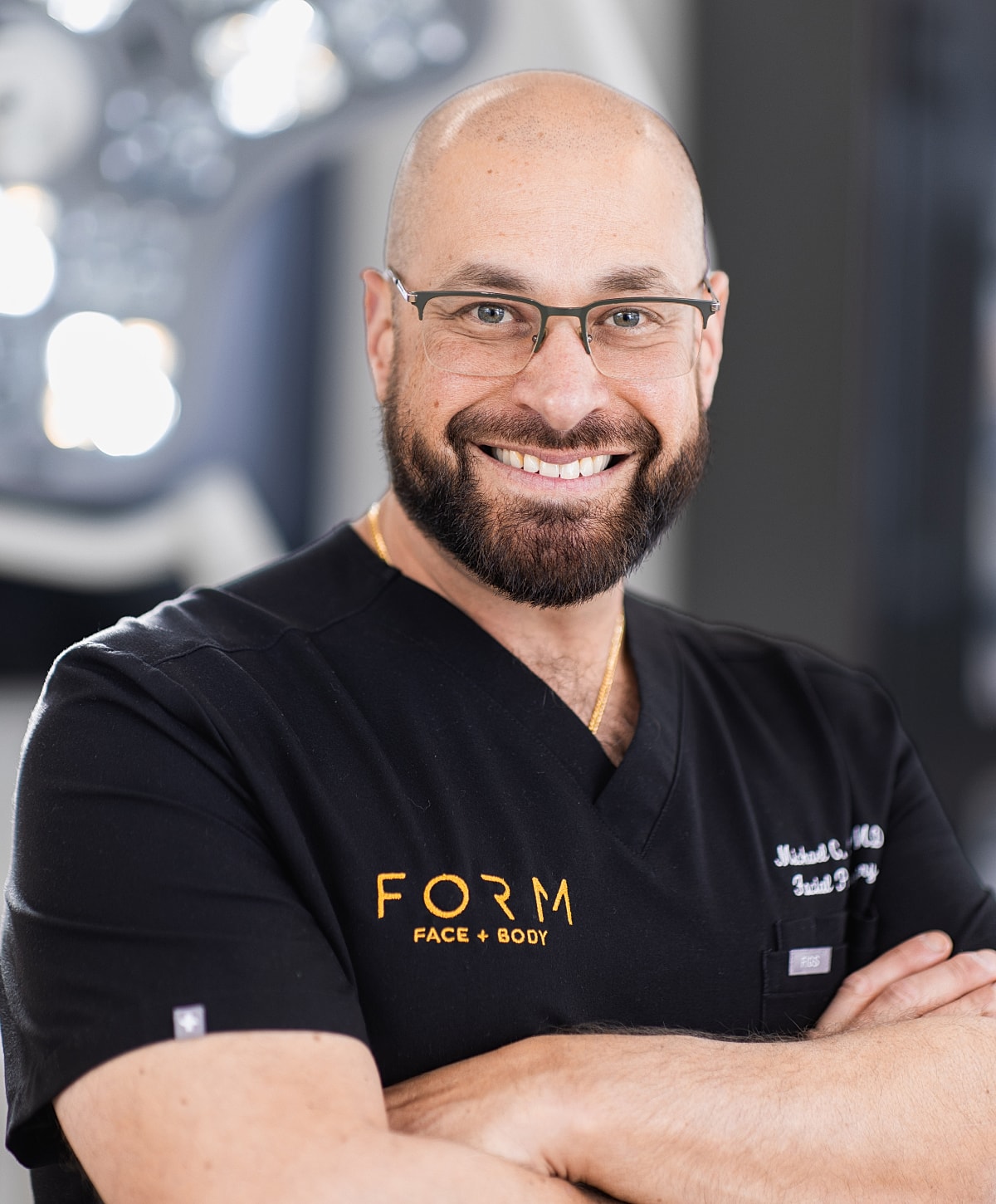
By Dr. Michael Brandt, MD, MSc, EMBA, FRCSC, Otolaryngology Head and Neck Surgeon, FORM Face + Body, Toronto
If you're considering a non-surgical skin-tightening treatment, there's a question I think deserves as much attention as the before-and-after photographs: what happens to the tissues underneath your skin, and could those changes make surgery more difficult later?
XERF, Thermage and Ultherapy may all improve mild facial laxity. But they're not interchangeable. They deliver energy differently, they feel different during treatment, and they may have different implications for the tissue planes I rely on during a facelift.
In my view, non-invasive monopolar radiofrequency treatments such as XERF and Thermage generally raise less concern about disruption of deeper surgical planes than procedures that deliberately place concentrated thermal injury into those planes, including some deep radiofrequency microneedling and focused-ultrasound treatments. This is a clinical and anatomical distinction—not a proven ranking from long-term studies of patients who later have surgery. Neither XERF nor Thermage is risk-free.
A second difference is comfort. Clinical data and patient accounts suggest XERF is often easier to tolerate than Thermage. That is encouraging, although a direct comparison has not yet established that it is consistently less painful.
As a surgeon who offers both non-surgical treatments and facelifts, I believe we should choose treatments for the face you have today without losing sight of the options you may want tomorrow.
All three treatments use energy to generate a controlled tissue response. The goal is collagen remodelling and improved firmness, not the physical repositioning of descended tissue that occurs with facelift surgery.
XERF delivers radiofrequency energy through a handpiece placed against intact skin. It combines 6.78 MHz and 2 MHz frequencies, with adjustable treatment modes and integrated cooling. These features allow the clinician to tailor treatment according to facial anatomy and the amount of laxity.
The treatment is designed to heat dermal and subdermal tissues. It does not introduce needles into the face, but it is not accurate to describe XERF as purely superficial: its deeper settings intentionally affect tissue beneath the dermis. That makes appropriate settings and patient selection important.
A prospective multicentre study involving 39 patients reported improvements in the appearance of facial laxity over 90 days, without persistent adverse events during the study period. A second, smaller study also reported encouraging short-term results. Both studies were relatively small, with limited follow-up, and neither examined the tissues during a later facelift.
At FORM Face + Body, I use XERF for selected patients with early laxity who want a modest improvement in skin firmness and facial contour. Depending on skin quality, I may combine it with laser resurfacing. I don't recommend it as a replacement for surgery when there is substantial tissue descent.
Thermage is also a non-invasive monopolar radiofrequency treatment. It has a substantially longer clinical history than XERF and uses energy delivered through a surface handpiece, with cooling intended to help protect the skin.
Like XERF, it can provide a subtle improvement in firmness for selected patients. And, like XERF, it does not physically reposition a heavy lower face.
From a surgical planning perspective, I generally group these two non-invasive monopolar RF technologies together. Neither punctures the tissues with energy-delivering needles or creates the same deliberately placed ultrasound coagulation points associated with focused-ultrasound treatment. That may make extensive disruption of deep surgical planes less of a concern than it is with some more invasive or more focally targeted energy treatments.
But surface delivery is not the same as superficial treatment. Both devices generate heat beneath the skin, and excessive heating can injure tissue. We do not have high-quality comparative studies proving that XERF or Thermage causes less deep fibrosis—or produces better later facelift outcomes—than every other device.
Ultherapy uses microfocused ultrasound to create small, concentrated thermal treatment zones at specific depths. Depending on the treatment, these can include deeper supporting layers of the face, near the superficial musculoaponeurotic system, or SMAS.
HIFU stands for high-intensity focused ultrasound. It is a broader term that includes multiple devices, and not all HIFU systems have the same targeting, visualization or safety profile as Ultherapy.
There is a logical reason for greater caution when a device deliberately deposits energy close to the layers involved in facelift surgery: any unexpected fat injury or fibrosis in those areas may complicate later tissue separation. But possibility is not proof of frequency. A systematic review of Ultherapy-related evidence found reports of fat loss, nerve symptoms and scarring, while also concluding that convincing published evidence of compromised later facelifts was lacking.
I don't tell patients that Ultherapy inevitably scars their facelift planes. I tell them that its treatment depth makes future surgical planning an important part of the discussion.
Comfort is one of the practical reasons XERF has attracted attention.
In a 2026 prospective XERF study, patients reported an average treatment discomfort score of 4.2 out of 10 without anaesthetic. A separate 16-patient XERF study reported an average of 4.31 out of 10. By comparison, previously published studies of Thermage platforms have reported average pain scores of about 6 to 7 out of 10, including approximately 6.06 with Thermage CPT and 6.9 with Thermage FLX in the studies discussed by the XERF researchers.
Those figures make XERF look promising from a comfort standpoint. They are not, however, a head-to-head trial.
Individual experiences online add useful context, although they are not scientific evidence. In a 2026 Reddit discussion, a patient who had undergone both treatments described XERF as considerably easier to tolerate, with discomfort concentrated around the jaw and neck. A first-person review in Allure also described XERF as manageable without numbing. Other XERF patients online, however, reported meaningful pain, and two patients in the smaller XERF clinical study rated their discomfort as severe.
My takeaway is that XERF appears to have a favourable comfort profile and may often be easier to tolerate than Thermage, but neither treatment should be advertised as painless. Patient comfort depends on the settings, treatment area, operator and individual sensitivity.
The degree of laxity matters more than the device name.
If you have early loss of firmness, subtle jowling or mild changes in jawline definition, non-surgical tightening may provide an improvement you consider worthwhile. XERF is one option I favour in appropriately selected patients, particularly when skin quality can also be addressed with laser resurfacing.
If your jowling is moderate, the expected benefit is more limited. A non-surgical treatment may still be reasonable if you want a subtle improvement and understand that limitation.
If you have significant jowls, loose neck skin or clearly descended facial tissues, none of these technologies can deliver the repositioning of a facelift. Surgery is the more effective option for substantial correction.
This distinction matters because treating the wrong problem isn't merely disappointing. Repeating aggressive treatments to avoid an operation may expose your tissues to additional thermal injury without getting you closer to the result you actually want.
A visible scar is easy to understand. Deep fibrosis is less obvious.
When tissue is heated, a controlled healing response may stimulate collagen remodelling. But excessive thermal injury, particularly when it reaches deeper tissue layers, can produce dense scar-like collagen, fat damage or adhesions between layers that normally move over one another.
During a facelift or neck lift, I need to identify anatomical planes and separate tissues safely. If those planes have become unusually adherent or fibrotic, dissection can be harder, the tissues may move less freely and the procedure may become less predictable.
This does not mean collagen stimulation itself is a complication. What matters is where the treatment acts, how much energy is delivered, whether the same area is treated repeatedly and how the individual patient heals.
The term radiofrequency covers very different treatments.
XERF and Thermage deliver energy through intact skin. RF microneedling devices such as Morpheus8 or other needle-based systems use electrodes inserted into the tissue to deliver heat at selected depths. Some RF-assisted procedures go deeper still.
In October 2025, the US Food and Drug Administration issued a safety communication about serious reported complications from certain uses of RF microneedling, including burns, scarring, fat loss, nerve damage and disfigurement. That warning does not establish the same risk for XERF or Thermage, and it should not be used to treat every RF device as though it works identically.
A 2026 review examining RF microneedling and later facelifts raised concerns about fibrosis, adhesions and changes in tissue planes, especially with deeper or repeated treatments. The authors also emphasized the need for better surgical outcome data.
For a patient who may ultimately want a facelift, this is why I am more cautious about unnecessary deep or repeated thermal treatments than I am about a carefully selected, conservatively delivered non-invasive monopolar RF treatment.
Because focused ultrasound can intentionally deliver energy to deeper facial structures, the possibility of thermal injury in or near a future surgical plane deserves attention.
But we need to be equally careful not to overstate the evidence. Published observations and adverse-event reports have raised concerns about fat loss, altered sensation and scarring after microfocused ultrasound. They have not established that most Ultherapy patients develop difficult facelift planes or that a future facelift will be compromised.
The concern is plausible enough to discuss before treatment. It is not a reason to tell every patient who has had HIFU that they have damaged their face.
In a study published in Aesthetic Surgery Journal, a surgeon reviewed 180 neck-lift patients, many of whom had undergone previous surgical or non-surgical treatments. In patients with relevant treatment histories, the operative findings included dense fibrosis, altered planes, rigidity and irregular fat distribution. The authors described more demanding dissection and difficulty restoring smooth contours in affected tissue.
This is a meaningful warning, but it is not proof that every device listed in the study causes the same problems. Patients had undergone different treatments, sometimes more than one, and the retrospective design cannot assign a specific risk to a single XERF, Thermage or Ultherapy session. Importantly, the study did not report major complications, even though operative complexity was increased in affected patients.
A separate surgical review in 2026 also discussed the potential effects of ultrasound-based treatments and RF microneedling on the layers used in a deep-plane facelift. These publications support asking better questions before treatment—not creating an unsupported league table of which device is safest.
Potentially, yes.
When tissue planes are distorted, the surgeon may have to dissect more carefully or modify the operative approach. Dense adhesions can make normal landmarks less distinct, while fat loss or uneven scarring may make it harder to create smooth, natural contours.
That can create concern about injury to nerves, damage to the skin's blood supply, healing problems or an outcome that is less refined than it otherwise might have been. The available studies have not established how often those specific complications occur because of a particular preceding energy treatment.
In other words, a more difficult operation does not automatically mean a complication will happen. But I don't think we should knowingly make future surgery more difficult without a convincing benefit from today's treatment.
If a patient is likely to consider a facelift in the future, I regard XERF and Thermage as relatively conservative options within the energy-based tightening category, provided they are used appropriately.
Both are delivered through intact skin. Neither places needles carrying heat into the deep tissues. That is a meaningful practical distinction from aggressive deep RF microneedling and certain focused-energy approaches that deliberately treat deeper fascial zones.
Of the two, XERF offers an appealing combination of adjustable energy delivery, cooling and a treatment experience that appears to be more comfortable in the small studies published so far. Thermage has the advantage of a longer clinical history.
The important qualification is that both can heat subdermal tissues. XERF can intentionally use deeper settings. Neither has been followed in a rigorous long-term study of subsequent facelift dissection, so I cannot honestly promise that either leaves surgical planes untouched or is definitively the least likely device to cause fibrosis.
My preference is to use the least aggressive treatment that has a reasonable chance of meeting the patient's goal and to avoid unnecessary deep tissue treatment, particularly in someone nearing the point where surgery will provide a better result.
Yes. Previous energy-based treatment does not automatically prevent facelift or neck-lift surgery.
What matters is whether the treatment produced meaningful changes in the tissue, where those changes occurred and how they affect surgical planning.
Before surgery, I want to know which devices were used, which areas were treated, the approximate dates and number of sessions, and any known treatment settings or complications. This information may influence the technique, the extent of dissection and the discussion of risks and expected results.
If you think you may want a facelift in the near future, a surgical consultation before another deep energy treatment is a sensible step. It may prevent you from spending money on an inadequate correction while exposing tissues to changes that could complicate your future procedure.
I generally have less concern about deep surgical-plane disruption with carefully delivered non-invasive monopolar RF, such as XERF, than with treatments designed to concentrate energy at deeper focal points. But there are no reliable comparative facelift studies proving that XERF is safer than Ultherapy in this respect. Device settings, treatment depth and individual response matter.
Thermage stimulates tissue remodelling through radiofrequency heating. Unwanted thermal injury and fibrosis are possible, but we lack evidence that routine Thermage treatment commonly produces severe adhesions that complicate facelifts. Its non-invasive delivery method makes it reasonable to distinguish it from deeper needle-based RF procedures.
It appears promising. Small XERF studies reported average discomfort around four out of ten, while several published Thermage studies reported higher average scores. Some patients with experience of both describe XERF as more comfortable. But there is no direct controlled comparison, and XERF can still be painful for some people.
Not necessarily. Surgery is usually still possible. However, if treatment causes deeper fibrosis, fat injury or adhesions, the operation can become more technically demanding, with a higher risk profile and achieving smooth contours may be harder. The risk is not the same for every technology or every patient, and the available research does not establish device-specific complication rates.
That depends on severity. Mild laxity may respond to non-surgical treatment. Significant jowling or tissue descent generally calls for surgery if you want substantial correction. I wouldn't recommend repeated energy treatments as though they can eventually produce the same result as a facelift.
Non-surgical tightening can be valuable when the problem is mild and the treatment is chosen carefully.
XERF and Thermage belong in a different discussion from aggressive deep RF microneedling. Their non-invasive delivery method gives me less reason to worry about disruption of deep surgical planes, although neither technology has been proven free of that risk. XERF also appears to offer a more comfortable treatment experience than Thermage for many patients, based on early clinical findings and some patient reports.
Focused ultrasound, including Ultherapy, may also have a role, but its deeper treatment targets make me especially attentive to how the tissues could respond and what a patient may want surgically in the future.
If significant tissue descent is already present, there is no reason to pretend that tightening technology can substitute for a facelift. And if you may need surgery later, it makes sense not to complicate that operation unnecessarily today.
At FORM Face + Body in Toronto, I can assess both surgical and non-surgical options. We'll look at your anatomy, the severity of laxity, previous treatments and your longer-term goals, then choose the approach most likely to provide a natural, worthwhile result.
https://pubmed.ncbi.nlm.nih.gov/41930066/ https://link.springer.com/article/10.1007/s10103-026-04996-0 https://pubmed.ncbi.nlm.nih.gov/39625163/ https://www.reddit.com/r/SFbitcheswithtaste/comments/1v9hnn7/how_much_are_you_guys_paying_for_xerf_and_is_it/ https://www.allure.com/story/xerf-radio-frequency-device-review https://www.fda.gov/medical-devices/safety-communications/potential-risks-certain-uses-radiofrequency-rf-microneedling-fda-safety-communication https://derma.jmir.org/2026/1/e78385 https://pubmed.ncbi.nlm.nih.gov/40712094/ https://pubmed.ncbi.nlm.nih.gov/41807247/
written by
Dr. Michael Brandt is a Royal College-certified Otolaryngology – Head and Neck Surgeon specializing in facial plastic and reconstructive surgery. He is fellowship-trained in facial plastic surgery and serves as an Assistant Professor at the University of Toronto, where he contributes to surgical education and research.