Published
10 minute read
For a busy executive, a hair transplant shouldn't feel like a gamble.
Yet that is one of the realities patients need to consider when elective medical care becomes international medical tourism. The procedure itself may be straightforward, but travelling to another country introduces questions that have little to do with how many grafts are being transplanted. Who is actually performing the procedure? What standards govern the facility? What happens if you develop a complication? Does your insurance cover a problem arising from planned cosmetic surgery abroad? And if something goes wrong, what regulatory or legal options do you realistically have?
For Canadians looking for high-quality hair restoration rather than simply the lowest possible price, those questions are leading to a different conversation. Increasingly in my practice at FORM Face + Body in Toronto, I meet patients who considered travelling overseas but ultimately decided that they would rather travel within Canada, know exactly who is responsible for their care, understand the standards under which their procedure is performed, and have continued access to the same medical team afterward.
For someone living in Vancouver, Calgary, Winnipeg, Halifax or elsewhere in the country, Toronto may still mean a flight and a hotel. But domestic travel for medical expertise is fundamentally different from becoming an international medical tourist.
The appeal of overseas hair-transplant packages is easy to understand. Prices can be lower. Hotels, airport transfers and transportation may be included. Some clinics advertise very large graft numbers and remarkably short turnarounds. For a professional whose time has value, however, the better question may not be, “How inexpensively can I have this done?” It may be, “How much uncertainty am I willing to add to an elective surgery?”
International medical travel can introduce uncertainty around regulation, professional licensing, insurance, medical records, follow-up and legal recourse. The Government of Canada specifically advises Canadians travelling abroad for medical care that accreditation standards, physician and nursing licensing, sterilization practices and infection-control procedures may differ from those in Canada. It also warns that follow-up may be more difficult and that Canadian physicians may not receive complete information about procedures performed abroad when a patient returns with a complication. [1]
That does not mean overseas medical care is inherently unsafe. There are excellent physicians and excellent hair-transplant centres around the world. The issue is that international travel adds another set of variables that the patient has to investigate.
For many executives, that is precisely what they are trying to avoid.
Hair transplantation itself also deserves to be viewed differently from the way it is sometimes marketed. It is frequently sold as a number: 3,000 grafts, 4,000 grafts, a “maximum graft” package. I think that encourages patients to focus on the wrong metric.
The real planning begins with why someone is losing their hair, whether the loss is stable, the quality and density of the donor area, how much native hair may be lost in the future, where the hairline should sit, how many grafts can responsibly be used today and how much donor supply needs to be preserved for later.
Donor hair is finite. Once it has been removed, there is no second donor area waiting for you. A transplant that looks impressive at 30 but leaves inadequate donor reserves at 45 isn't necessarily a successful long-term plan.
The procedure should be designed around a patient's lifetime hair-loss pattern, not around selling the largest possible graft count.
This is also why standards matter.
Whether someone is travelling across Canada or considering leaving the country, I think patients should know who the physician responsible for the procedure is, who will harvest the follicles, who creates the recipient sites, who places the grafts, what qualifications the nursing team holds, how the facility is regulated, what infection-prevention standards apply, and what happens if there is a medical problem.
Those questions are less exciting than the hotel or chauffeur included in a medical-tourism package. They are also considerably more important.
Within Canada, physicians and nurses practise within provincial regulatory frameworks, and their licensure and professional standing can generally be verified through their respective colleges. Facility standards can also be independently reviewed where regulatory programs apply.
FORM is located in Ontario, so our new FORM Face + Body campus operates within Ontario's regulatory framework which falls under the College of Physicians and Surgeons of Ontario (CPSO).[2] Ontario's out-of-hospital standards rigorously address patient selection, equipment, infection prevention and control, emergency preparedness, adverse events and quality assurance. [3]
For a patient travelling from another province, the point is not that they need to understand every detail of Ontario regulation. The point is that the standards governing the facility are visible, established and independently verifiable before they ever get on a plane.
There is also an outdated perception that Canadians have to travel abroad to access sophisticated hair-restoration technology. They don't.
At FORM, our hair-restoration centre includes dedicated transplant suites, manual FUE capability and the ARTAS iXi robotic FUE platform. [4] ARTAS uses digital imaging, software and robotic guidance to assist with follicular-unit selection and extraction.
I don't think that means a patient should choose a clinic simply because it owns a robot. Technology is useful when it helps execute a good plan; it does not replace the plan itself. The physician still has to decide whether transplantation is appropriate, where the hairline belongs, where density should be concentrated, how the donor area should be protected and what future hair loss is likely to look like.
For some patients, manual FUE is the better tool. For others, robotic FUE makes sense. Having both means we can select the technique for the patient rather than selecting the patient for the machine.
The advantages of staying in Canada become even more apparent when something does not go exactly as planned.
If a patient develops an infection, significant swelling, bleeding or another medical problem while abroad, they are relying on the medical system in that country. If the issue becomes apparent after returning home, a Canadian physician may be asked to manage a complication from a procedure they did not perform, sometimes without complete operative records or with documentation in another language.
The Canadian Medical Protective Association has specifically discussed the continuity-of-care and information-transfer challenges that can arise when Canadian patients return from treatment abroad. [5]
For an executive already managing a demanding schedule, coordinating a medical complication across borders is not a trivial inconvenience.
A patient who travels to Toronto from another province may still need to return for an in-person assessment if something requires attention. But the original team remains in Canada. The operative records are here. The regulatory framework is Canadian. Communication and follow-up are considerably more straightforward.
Insurance is another area that deserves more attention than it usually receives.
Patients should never assume ordinary travel insurance will cover a complication arising from a planned overseas cosmetic procedure. The Government of Canada warns that most travel insurance policies do not cover planned medical procedures performed in another country, and provincial or territorial health plans may not cover expenses that occur in the country where an elective procedure was performed. [1]
That can become consequential if a patient needs hospitalization, additional surgery or medical evacuation. Hair transplantation is elective surgery. The fact that it is usually performed under local anaesthesia does not eliminate medical risk.
Before travelling internationally for any elective procedure, patients should obtain written clarification of exactly what their policy covers.
The same principle applies to medico-legal protection. When care is delivered in Canada, concerns are generally handled through Canadian provincial regulatory and legal systems. When treatment takes place in another country, the patient's rights depend on that country's laws and professional regulatory structure.
The Government of Canada explicitly cautions medical tourists that their legal options may be limited if something goes wrong. [1] The Canadian Medical Protective Association also notes that its structure is primarily designed around medico-legal issues arising from medical care delivered within Canada. [5]
That does not mean a patient has no legal protection overseas. It means the patient needs to know what that protection is before surgery, not after a problem develops.
For Canadians seeking expertise, travel may still make sense. The question is how far they need to travel and what additional uncertainty they are willing to accept.
A patient from British Columbia, Alberta, Saskatchewan, Manitoba, Quebec or Atlantic Canada may decide that flying to Toronto provides access to the physician, facility and technology they want while keeping their care within Canada. They can travel domestically, undergo consultation and treatment within a Canadian healthcare and regulatory environment, know who is responsible for their procedure, retain access to their records and know where the treating team will be if follow-up is required.
That does not eliminate surgical risk. Nothing does.
What it can eliminate is unnecessary uncertainty.
There are excellent hair-transplant physicians around the world, and this is not an argument that Canadian medicine is automatically superior. It is an argument for understanding the entire value of elective medical care.
For executives in particular, the lowest sticker price may not be the lowest-cost option once time, uncertainty, follow-up, insurance and accountability are considered.
At FORM, our approach is to combine medical assessment, long-term hair-loss planning, manual and robotic FUE, nursing support and ongoing follow-up within a regulated Canadian medical environment.
For the executive patient, that may be the real luxury: not the hotel, chauffeur or medical-tourism package, but knowing who is responsible for your care, what standards they work under, and who will still be there after the procedure is finished.
Hair restoration should be a long-term medical plan.
For many Canadians, there is a strong argument for keeping that plan in Canada.
A hair transplant is an elective medical procedure with potential risks and variable outcomes. Individual assessment is required to determine candidacy and the appropriate treatment strategy. Patients considering medical travel should independently verify physician credentials, facility standards, insurance coverage and follow-up arrangements. This article is educational and is not a substitute for individual medical advice.
written by
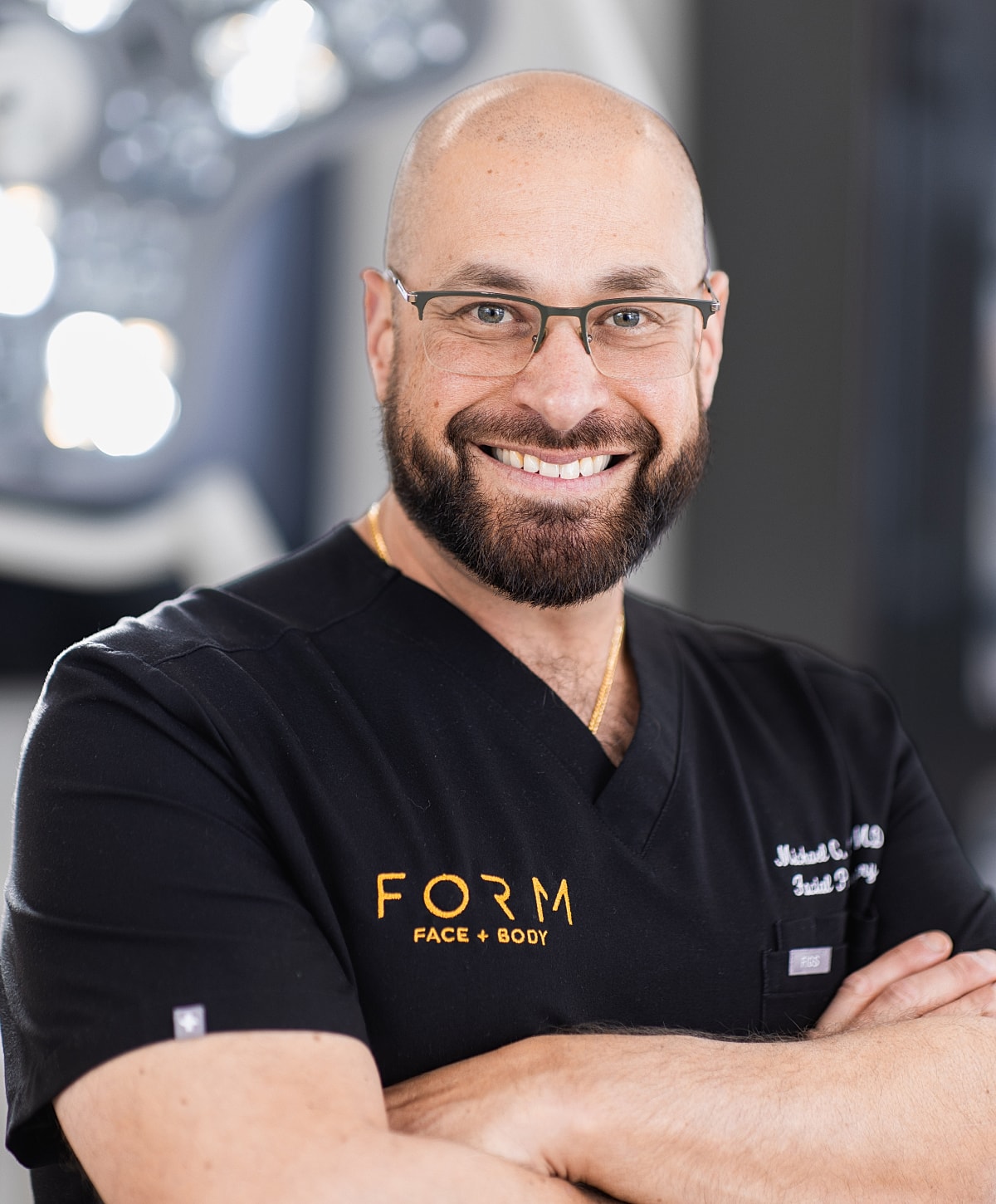
Dr. Michael Brandt is a Royal College-certified Otolaryngology – Head and Neck Surgeon specializing in facial plastic and reconstructive surgery. He is fellowship-trained in facial plastic surgery and serves as an Assistant Professor at the University of Toronto, where he contributes to surgical education and research.