Published
9 minute read
One of the most common questions I get from younger patients considering hair restoration is:
“Am I too young for a hair transplant?”
My answer is usually: your age matters less than whether your hair loss is stable.
I don't use 25, 30 or any other birthday as an automatic cutoff for hair transplantation.
A 23-year-old with a well-understood pattern of hair loss that has been medically stabilized may ultimately be a more reasonable surgical candidate than a 35-year-old whose hair is still rapidly thinning.
What matters is whether I can make a plan for your hair that still makes sense years from now.
That is the part of hair transplantation that sometimes gets overlooked.
A hair transplant moves follicles. It doesn't stop hair loss.
Hair follicles are taken from a relatively stable donor area, usually at the back and sides of the scalp, and moved to areas where hair has been lost.
Those transplanted hairs are intended to remain.
But the native hair around them can continue to thin if your androgenetic alopecia (male pattern hair loss), or genetic pattern hair loss, is still progressing.
That creates the problem.
Imagine restoring a dense hairline at 22 while the hair immediately behind it continues to disappear over the next several years. You can eventually be left with transplanted hair in front and progressively thinning hair behind it.
You can transplant again, but your donor supply isn't unlimited.
This is why I tell younger patients:
Your donor hair is a finite resource. We have to plan for the hair you may lose tomorrow, not just the hair you want back today.
Current reviews of hair-transplant candidacy similarly emphasize medical optimization and long-term planning before surgery, particularly when hair loss remains progressive. [1]
No.
There is no biological switch that flips on your 30th birthday and suddenly makes hair transplantation appropriate.
The important question is whether we understand what your hair loss is doing.
When I assess a younger patient, I am looking at:
This is why age alone is an incomplete way to decide candidacy.
Consensus recommendations on androgenetic alopecia also emphasize that transplantation should be approached cautiously when hair loss remains clinically active, particularly in younger patients. [2]
The goal is not simply to determine whether I can transplant you.
It is whether I should.
Stable does not necessarily mean that you have not lost a single hair for years.
Androgenetic alopecia is a progressive condition.
What I want to know is whether we have achieved enough control over the process that I can reasonably plan around it.
That may mean documenting your scalp over time with photographs and trichoscopy, looking at areas of miniaturization and following your response to medical treatment.
If the frontal hairline is rapidly moving backward and the hair behind it is progressively miniaturizing, surgery may be premature.
If treatment has significantly slowed that progression and the pattern has become more predictable, transplantation may become more reasonable.
We aren't waiting for you to get older. We are waiting for the hair loss to become controllable enough to make a responsible long-term plan.
Sometimes, yes.
This is one of the reasons I view medical hair restoration and surgical hair restoration as parts of the same program rather than separate treatments.
In male androgenetic alopecia, dihydrotestosterone, or DHT, contributes to progressive miniaturization of genetically susceptible follicles.
Medications that inhibit the conversion of testosterone to DHT can help slow that process.
Finasteride and dutasteride are both 5-alpha-reductase inhibitors, meaning they reduce DHT production. Dutasteride inhibits both type I and type II forms of the enzyme and generally produces greater DHT suppression than finasteride. Clinical studies and recent reviews support the effectiveness of both medications for male androgenetic alopecia. [3,4]
A recent Canadian expert consensus included oral finasteride and oral dutasteride among recommended medical options for adult androgenetic alopecia. [5]
For the right patient, getting the hair loss under better control can change the transplant conversation.
Instead of chasing an actively disappearing hairline, we can potentially stabilize the native hair first and then design a transplant around a more predictable situation.
That is a very different strategy.
No.
Medication needs to be individualized.
Some patients may use finasteride. Some may be appropriate candidates for dutasteride. Minoxidil or other therapies may also form part of the plan.
Dutasteride deserves one important clarification for Canadian patients: although it is used by physicians for androgenetic alopecia and Canadian hair-loss experts have recommended it as a treatment option, oral dutasteride is not specifically approved by Health Canada for hair loss. Its approved Canadian indication is benign prostatic hyperplasia, so its use for androgenetic alopecia is off-label. [5,6]
Finasteride 1 mg, by comparison, is authorized in Canada for male pattern hair loss. [7]
Off-label does not automatically mean inappropriate. It means the medication is being prescribed for an indication outside its official product approval, which should be discussed with the patient.
These medications also have potential side effects and aren't appropriate for everyone.
My goal isn't simply to put every young patient on a DHT blocker so that I can perform a transplant.
The goal is to diagnose the hair loss correctly, discuss the benefits and risks of treatment, and determine whether we can build a safe long-term strategy.
Because a transplant you undergo at 24 has to coexist with the hair pattern you may have at 44, 54 and beyond.
The donor area is not an unlimited bank account.
Every follicular unit we remove is one we cannot harvest again.
That means I am particularly careful with younger patients about:
The question isn't simply:
“How many grafts can we transplant?”
It is:
“How many grafts should we use now while preserving options for the future?”
This is also why choosing between manual FUE, device-assisted FUE or ARTAS robotic FUE doesn't solve the fundamental planning problem.
Those are methods of harvesting follicles.
The strategy still comes first.
Then I think you deserve more than being told, “Come back when you're 30.”
The first step is figuring out why you're losing hair.
If it is androgenetic alopecia, we can document the pattern, assess the donor area and discuss whether medical treatment could preserve or improve the native hair.
Then we follow it.
For some younger patients, the right answer will be to treat medically and postpone transplantation.
For others, once the hair loss is sufficiently stable and the long-term donor strategy makes sense, surgery may become reasonable.
The point is that waiting should have a purpose.
You shouldn't simply be waiting for birthdays to pass.
There isn't one.
For an adult considering hair restoration, stability, diagnosis and long-term planning matter more than a specific age cutoff.
A good candidate has:
At FORM Face + Body in Toronto, that is how I approach younger hair-restoration patients.
I don't start by asking whether you're 24 or 34.
I start by asking:
What is your hair going to do next?
If we can understand that, stabilize what needs to be stabilized and preserve enough donor hair for the future, then age alone does not necessarily decide whether transplantation is appropriate.
A good hair transplant shouldn't just look good the year after surgery.
It should still make sense as your hair continues to age.
A medical assessment is required to diagnose hair loss and determine whether medical treatment or hair transplantation is appropriate. Prescription medications have risks and contraindications and must be considered individually. This article is educational and is not a substitute for personal medical advice.
written by
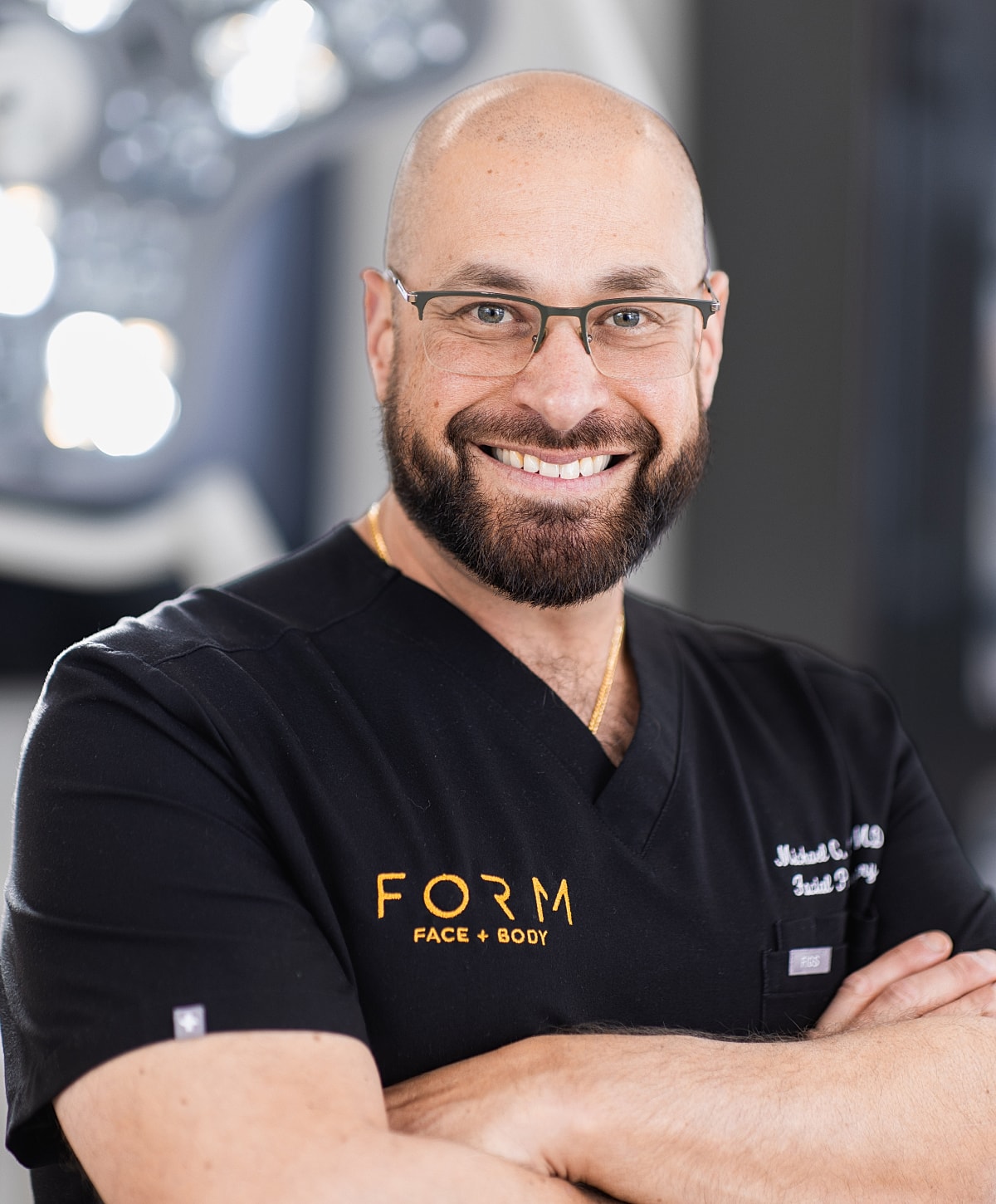
Dr. Michael Brandt is a Royal College-certified Otolaryngology – Head and Neck Surgeon specializing in facial plastic and reconstructive surgery. He is fellowship-trained in facial plastic surgery and serves as an Assistant Professor at the University of Toronto, where he contributes to surgical education and research.