Published
13 minute read
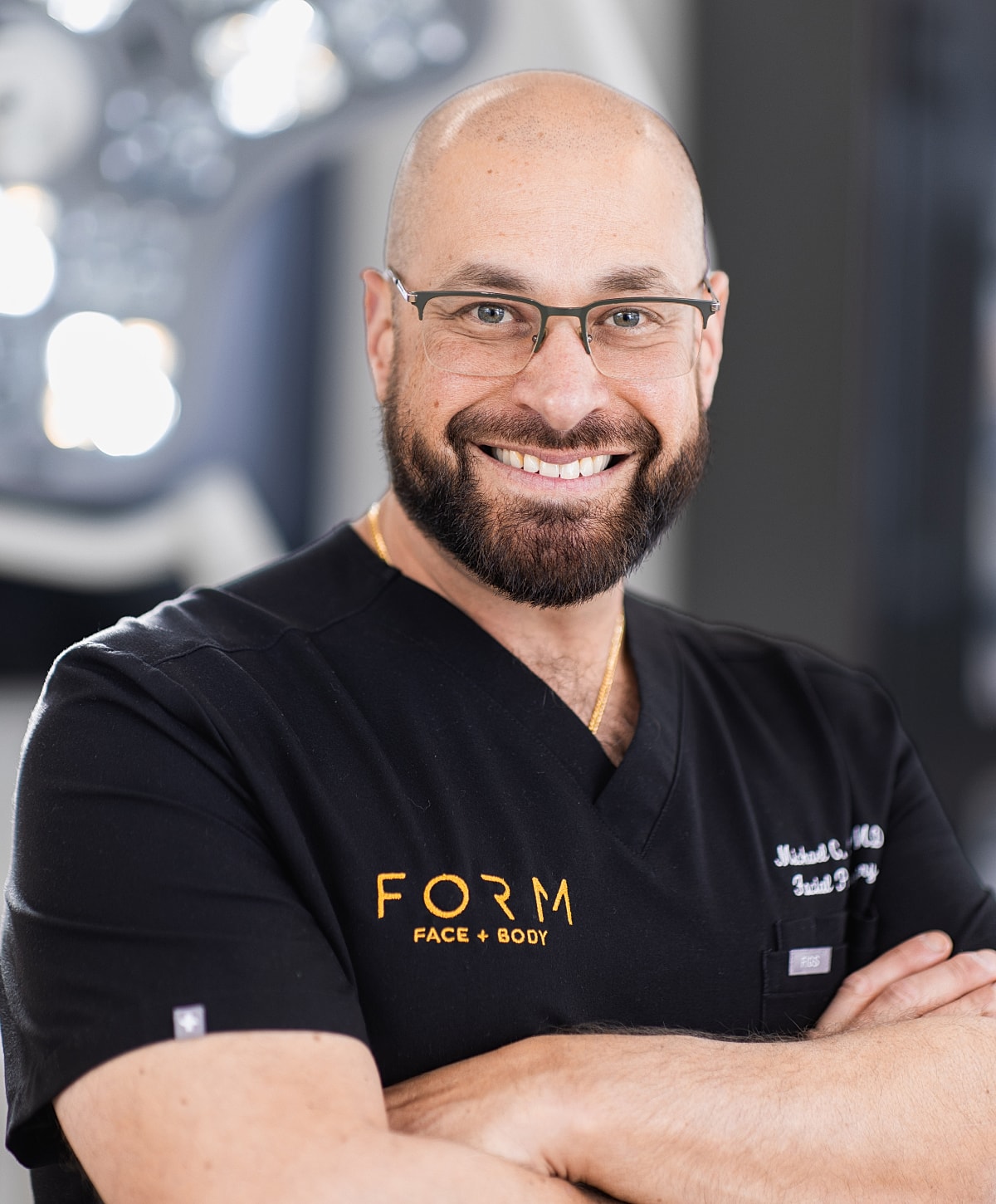
By Dr. Michael Brandt, MD, MSc, EMBA, FRCSC, Otolaryngology Head and Neck Surgeon, FORM Face + Body, Toronto
If you're considering a hair transplant, you've probably come across clinics promising 3,000, 4,000 or even 5,000 grafts in a single day. It sounds straightforward: more grafts should mean more hair, better coverage and a better result.
Not necessarily.
The number of grafts matters, but it's only one part of a successful hair transplant. A graft has to be harvested without significant injury, protected while it's outside the body, implanted correctly and ultimately survive. And every graft we take comes from a donor area with a limited supply.
My goal isn't to transplant the biggest number I can advertise. It's to create natural-looking coverage while protecting the donor hair you may need for the rest of your life.
A graft is a small unit of tissue containing one or more hair follicles. We commonly work with naturally occurring follicular units, which may contain one, two, three or sometimes four hairs.
That means 2,000 grafts does not necessarily equal 2,000 hairs. Depending on the mixture of follicular units, it may represent considerably more hairs. Two patients receiving the same number of grafts can therefore see very different coverage.
Hair thickness, curl, colour contrast with the scalp and where the grafts are placed also influence how full the result looks. A well-designed hairline with appropriate density behind it can look more natural than a larger transplant that puts grafts in the wrong places.
This is why I don't begin a consultation by promising a number. I begin by looking at the patient's hair loss, their donor area and the result they're trying to achieve.
There is no reliable universal number for a receding hairline, thinning crown or more advanced pattern of hair loss.
At FORM Face + Body, I start by evaluating the diagnosis and whether the hair loss is stable enough for surgery. I examine the donor region and assess follicular unit density, the number of hairs per unit, shaft thickness and signs of miniaturization. Trichoscopy, standardized photographs and digital hair assessment help us make that evaluation more objective.
Then we decide where the available grafts can make the greatest visual difference.
For some patients, restoring the frontal hairline and the area immediately behind it will provide the greatest impact. Others are concerned mainly about the crown. Those are different planning problems. Spreading a limited number of grafts across a very large area can leave everything looking thin.
I also have to think beyond the next 12 months. Hair loss can continue for decades, and a hairline that looks appealing today must still make sense if the surrounding native hair thins later.
This is one of the most important questions—and the research doesn't support an overly simple answer.
It’s important to recognize that as the size of a session increases, so does the challenge of maintaining the same standard of care for every graft. There are more follicles to extract, examine, preserve and implant. The procedure generally takes longer, and the demands on the surgeon and surgical team increase.
The important question isn't simply, "Can a clinic do 5,000 grafts?" It's, "Can the team safely harvest that number from my donor area and maintain graft quality throughout the procedure?"
One of the less-discussed realities of hair transplantation is that not every transplanted graft will grow successfully.
Published survival rates vary considerably depending on the technique, patient selection, how survival was measured and the conditions of the study. An attractive percentage quoted by a clinic is not a guarantee of what will happen in an individual patient.
Several factors influence whether follicles survive.
Follicles are delicate living structures. A graft may be cut, crushed or injured during extraction, and some damage can be difficult to recognize with the naked eye.
A 2021 experimental study found that damaged follicular units had substantially poorer survival than intact controls when transplanted into mice. Those percentages cannot be transferred directly to human clinical outcomes, but the biological message is important: the way a graft is harvested matters.
I use both ARTAS iXi robotic FUE and manual FUE techniques, including systems such as SmartGraft and NeoGraft. These are tools that can help with different harvesting requirements. Neither a robot nor a handheld device guarantees survival. My responsibility is to select the appropriate technique, supervise the process and protect the quality of the grafts.
Once a graft is removed, it temporarily loses its normal blood supply. How long it remains outside the body—and how it is stored—can affect its viability.
In an early study frequently cited in the hair-transplant literature, graft survival was approximately 95% after two hours outside the body and 86% after six hours under the conditions tested. These are historical experimental observations, not a formula for predicting survival in a modern operation. More recent techniques, preservation solutions and team workflows may change the relationship.
The practical lesson remains relevant: time, temperature, hydration and orderly graft handling all matter.
A large session can be organized to minimize graft waiting time. A smaller session can still be poorly handled. Quality control, not the clock alone, determines whether a transplant is performed well.
Grafts can be damaged by dehydration, inappropriate storage conditions or rough handling during implantation. International expert recommendations emphasize appropriate holding solutions and careful preservation, especially when grafts will remain outside the body for extended periods.
Newer additives and biologic approaches are being investigated, but they should not distract from the basics. Good surgery still depends on gentle extraction, reliable preservation and precise placement. No graft-soaking product can compensate for badly damaged follicles or careless handling.
Packing more grafts into a small area is different from harvesting more grafts during an entire session. It's possible to have a relatively small transplant with dense placement in one region, or a large transplant distributed across a broad scalp area.
High local density can sometimes compromise graft growth if the recipient sites produce excessive injury or the tissue's blood supply is inadequate. But the research is mixed. A small study found substantial variation between two patients treated at different densities, while another observational report demonstrated excellent growth at high density in one carefully studied patient.
There is no single density that is right for every scalp. Existing hair, scar tissue, skin characteristics, blood supply and graft size all matter. I want enough density to create a convincing result, not so much that we're introducing unnecessary risk.
This, for me, is the strongest argument against chasing the largest possible graft count.
Hair transplantation doesn't create new follicles. It redistributes existing ones, usually from the back and sides of the scalp to areas affected by hair loss.
Every follicular unit removed through FUE leaves fewer units behind in the donor area. FUE avoids a long linear donor scar, but it does create many small extraction scars and can cause visible thinning if too many grafts are taken.
A 2026 review of FUE complications identified overharvesting as an important cause of donor depletion. The result can be a patchy or "moth-eaten" appearance that is difficult to repair, particularly when a patient wears their hair short. Another 2026 review emphasized the importance of donor mapping and reserving grafts for future procedures.
The safe amount is different for every person. A patient with a large, dense, stable donor region may tolerate a larger procedure than someone with a narrow donor zone, fine hair or early miniaturization.
A high graft count is not impressive if the back of the scalp looks depleted afterward.
In my practice, I generally prefer carefully planned sessions of fewer than 3,000 grafts.
This is a planning philosophy, not a universal biological cutoff. Published guidelines describe approximately 2,500 to 3,000 grafts as a commonly appropriate upper range for harvesting in one session without visible donor depletion, while acknowledging that individual circumstances vary. The supporting evidence is not strong enough to establish an absolute limit.
My preference reflects three priorities: maintaining careful graft handling, protecting the donor area and leaving flexibility for future hair loss.
If a patient needs more extensive coverage, I would rather have an honest conversation about what can be achieved in one session, what may require a later session and what grafts we should preserve. There is no prize for using every available donor follicle today.
I also don't believe patients should choose a hair-transplant clinic based mainly on the device it owns or the maximum number of grafts it advertises. The plan matters more than the machine.
That possibility should be considered before the first transplant.
Transplanted hair from an appropriate stable donor zone generally retains more of its resistance to pattern hair loss, but the native hair around it may continue to thin. Some patients may eventually want additional density or coverage in another area.
This is why medical stabilization is so important. Depending on the diagnosis and individual circumstances, we may discuss treatments such as finasteride or dutasteride, minoxidil, or other appropriate medical options to help preserve native hair. These medications have benefits and potential adverse effects that need individualized discussion.
I would rather design a conservative hairline that can age naturally than create an overly aggressive one that uses too many grafts and becomes isolated as hair loss progresses.
When comparing proposals from clinics, ask what the recommended graft number is based on. Was your donor density measured? Was miniaturization assessed? Is the proposed hairline appropriate for your age and likely future hair loss? How much donor hair will remain afterward?
Also ask who performs and supervises graft harvesting, how grafts are handled during surgery and what happens if growth is less than expected.
A lower graft count isn't automatically evidence of better care, just as a higher count isn't automatically evidence of an aggressive clinic. What matters is whether the plan is individualized, the donor area can safely support it, and the team can consistently protect the grafts throughout the procedure.
It can be, depending on the area being treated, your hair characteristics and the density you're trying to achieve. For some patients, far fewer grafts will make a meaningful difference. For others, 3,000 grafts may not cover all areas of concern in one procedure. An examination is needed to estimate an appropriate number.
Not necessarily. Published series show that larger sessions can have good reported growth in carefully selected patients. However, they require sufficient donor reserves, an experienced team, meticulous graft handling and a realistic assessment of the risks of overharvesting. A 5,000-graft plan should not be treated as appropriate for everyone.
No. Graft growth is influenced by the quality of harvesting, storage, placement, the recipient scalp and individual healing. Published survival rates vary, and no responsible clinic can guarantee that every graft will grow.
Neither approach is automatically better for every patient. Robotic FUE can assist with image-guided graft selection and harvesting, while manual FUE provides flexibility in selected situations. The surgeon's planning and the care of the grafts remain essential regardless of the device used.
Yes. Excessively dense placement may cause unnecessary trauma or compromise growth in some scalps. But dense packing can also succeed when it is carefully performed in suitable patients. Appropriate placement density depends on anatomy and tissue conditions, not a universal number.
When I assess someone for a transplant, I'm not trying to maximize their graft count. I'm trying to maximize the long-term value of a limited donor supply.
That means choosing a natural hairline, allocating grafts where they'll make the greatest difference, protecting every follicle through harvesting and implantation, and planning for the possibility of future hair loss.
Large hair transplants can produce good results. But bigger is not automatically better, and a promise of thousands of grafts doesn't tell you how many will survive—or what the donor area will look like afterward.
At FORM Face + Body in Toronto, I evaluate each hair-restoration patient and develop a plan based on their diagnosis, donor supply and long-term goals. Sometimes that means surgery. Sometimes it means stabilizing the hair loss first. And sometimes the best plan is to do less now so we preserve more options for later.
If you're considering a hair transplant and want to understand what graft number makes sense for you, I invite you to come in for an assessment. We'll look at what you have, what can realistically be achieved and how to protect your options for the years ahead.
https://pubmed.ncbi.nlm.nih.gov/31529675/ https://pubmed.ncbi.nlm.nih.gov/21031063/ https://pubmed.ncbi.nlm.nih.gov/33165067/ https://pubmed.ncbi.nlm.nih.gov/37477225/ https://pubmed.ncbi.nlm.nih.gov/18462426/ https://pubmed.ncbi.nlm.nih.gov/41709896/ https://www.mdpi.com/2079-9284/13/3/155 https://pubmed.ncbi.nlm.nih.gov/34908769/
written by
Dr. Michael Brandt is a Royal College-certified Otolaryngology – Head and Neck Surgeon specializing in facial plastic and reconstructive surgery. He is fellowship-trained in facial plastic surgery and serves as an Assistant Professor at the University of Toronto, where he contributes to surgical education and research.